

7 Best Customer Retention Strategies for Affiliate Marketing


You’re getting traffic. People are clicking your links. Some are even buying.
But then they’re gone.
No second visit. No repeat purchase. Just a one-time transaction and silence.
Here’s the thing most affiliate marketers overlook: chasing new customers every single day is exhausting, expensive, and, honestly, unnecessary when you already have people who’ve trusted you once.
A customer who bought through your recommendation is already warm. They know you. They listened to you. Getting them to come back is far easier than convincing a cold stranger to click.
Studies consistently show that returning customers spend more, convert faster, and cost less to re-engage than new visitors.
In this guide, you’ll learn the best customer retention strategies specifically built for affiliate marketers. Not generic business advice. Practical, proven approaches you can apply whether you run a product review blog, a WordPress affiliate site, or a comparison-based niche site.
Let’s get into it.
What is customer retention in affiliate marketing?
Customer retention, in its simplest form, is your ability to keep existing visitors, subscribers, and buyers coming back and engaging with your content and recommendations over time.
In traditional e-commerce, retention usually means getting someone to repurchase from your store. In affiliate marketing, it looks a little different. You don’t own the product. You don’t control the checkout. But you do own the relationship, and that’s where retention lives.
So, what is customer retention in affiliate marketing? It’s about keeping your audience connected to you, your content, and your recommendations long after their first click or purchase. It’s what turns a one-time reader into a loyal follower who trusts your advice every time they’re ready to buy.
Retention vs. Acquisition
Customer acquisition and retention strategies serve different purposes.
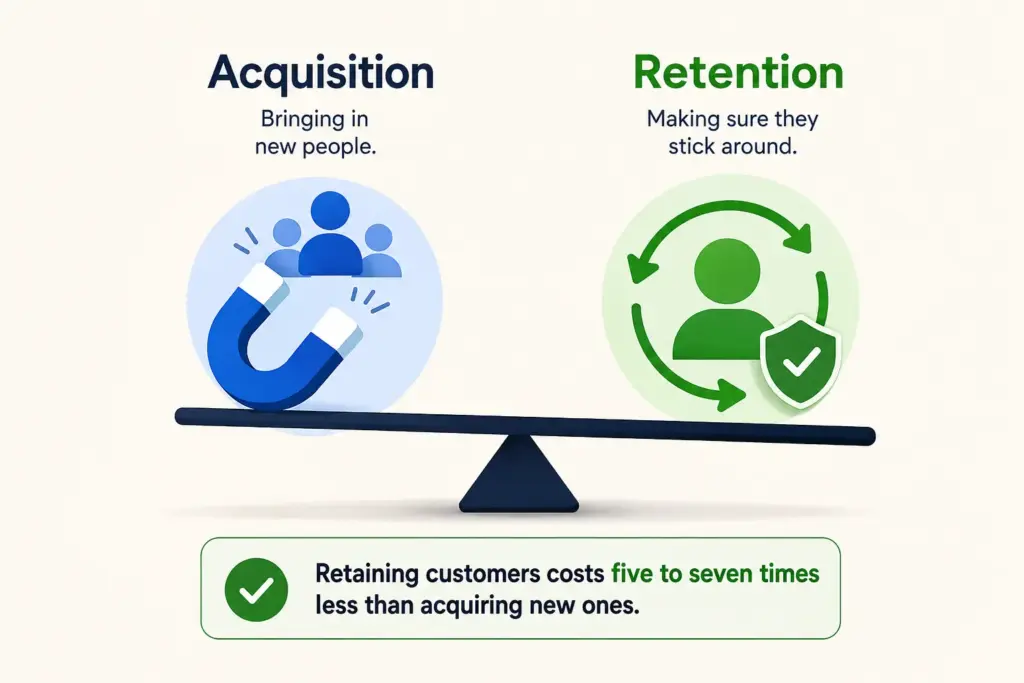
Acquisition is about bringing in new people. Retention is about making sure they stick around.
Most affiliate marketers pour almost all of their energy into acquisition, SEO, paid ads, and social media, while completely ignoring what happens after someone lands on their site or makes a purchase through their link.
The imbalance is costly. Acquiring a new customer can cost five to seven times more than retaining an existing one. For affiliate marketers working on tight margins, that math matters.
Why is customer retention important?
Because revenue from existing audiences is more predictable, more profitable, and more sustainable than constantly hunting for new eyeballs.
When someone has already trusted your recommendation and made a purchase, they’ve crossed a significant psychological threshold.
They’ve decided you’re worth listening to. Every future recommendation you make carries that earned credibility. That trust, if you protect it, becomes a compounding asset.
For Amazon affiliates, a returning reader who trusts your reviews is more likely to click multiple product links in one session.
A recent study shows that current customers spend 67% more than new customers. It highlights the importance of loyalty and retention.
For SaaS affiliates, a subscriber who found value in your comparison post is more likely to revisit when their current tool stops working for them.
For bloggers running product review websites, long-term readers become advocates who share your content and bring in organic referrals.
Why is customer retention important beyond just revenue? Because it stabilizes your business. When Google updates hit, and your traffic drops, an engaged email list keeps your income from collapsing overnight.
7 Best customer retention strategies for affiliate marketers
Most advice on customer retention tactics is written for e-commerce brands with loyalty programs, discount codes, and customer service teams.
You don’t have any of that. But you have something powerful: a direct line to your audience through content and email.
Here are the customer retention strategies for affiliate marketers that actually work.
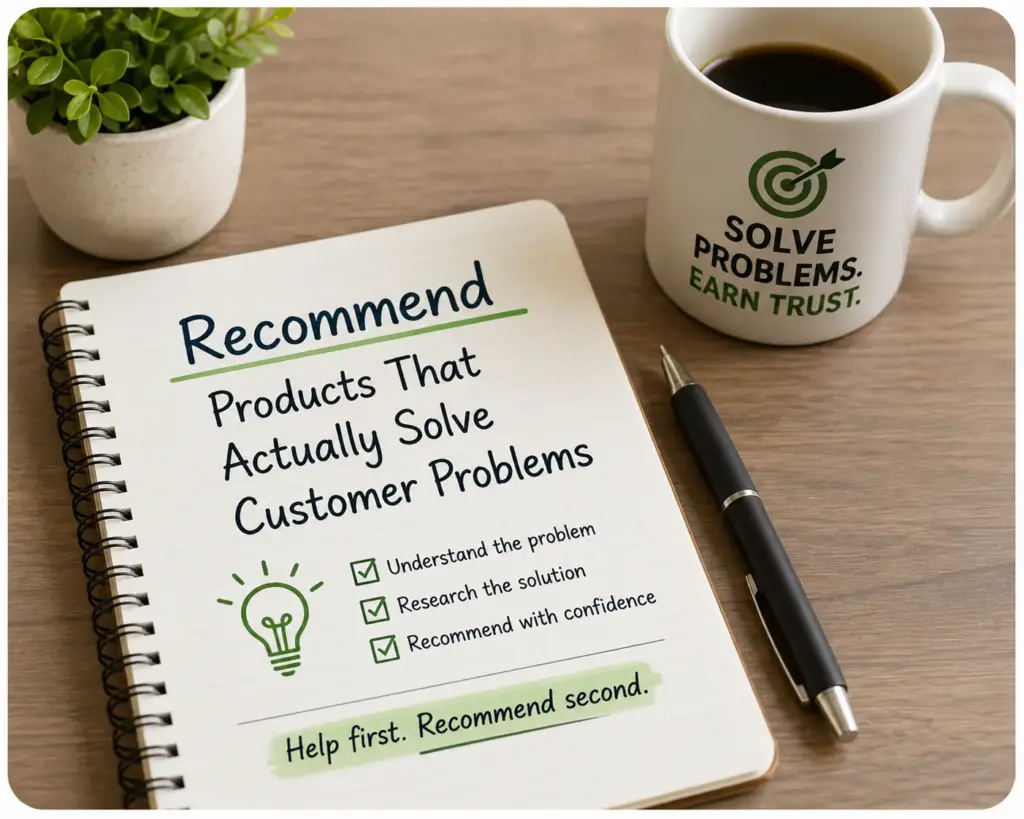
1. Recommend products that actually solve customer problems
Trust is the only currency that matters in affiliate marketing, and you spend it every time you make a recommendation.
When you promote a product that genuinely helps your audience, you’re not just earning a commission. You’re reinforcing the reason they follow you.
Before you add an affiliate link, ask yourself honestly: would I recommend this product to a friend who has this problem? If the answer is hesitation, skip it or find something better. Avoid low-quality promotions even when the commissions are tempting. One bad recommendation can undo months of relationship building.
This is especially important for Amazon affiliates and product review site owners, where readers are often in an active buying mindset and will remember whether your recommendation worked out.
The best customer retention strategies always start here because everything else, email, content, community, depends on your audience believing that you have their interests at heart.
2. Build an email list instead of depending on one-time clicks
If someone visits your site and leaves without subscribing, you’ve likely lost them forever. They might not remember your domain. They might not come back from Google. That relationship is essentially over before it started.
An email list changes that equation entirely. It gives you a direct channel to reach people who’ve already shown interest in your content. No algorithm. No platform changes. Just a direct line.
Capturing visitors before they leave is one of the most impactful online store customer retention strategies you can adapt for affiliate sites.
Use a lead magnet relevant to your niche, a free guide, a comparison checklist, a resource list, and offer it in exchange for an email address.
Once they’re on your list, use newsletters and follow-up sequences to stay connected. Share new content. Revisit old recommendations. Highlight seasonal deals. Introduce complementary products. The goal is to stay present in their inbox so that when they’re ready to buy again, you’re the first person they think of.
3. Create helpful post-purchase content
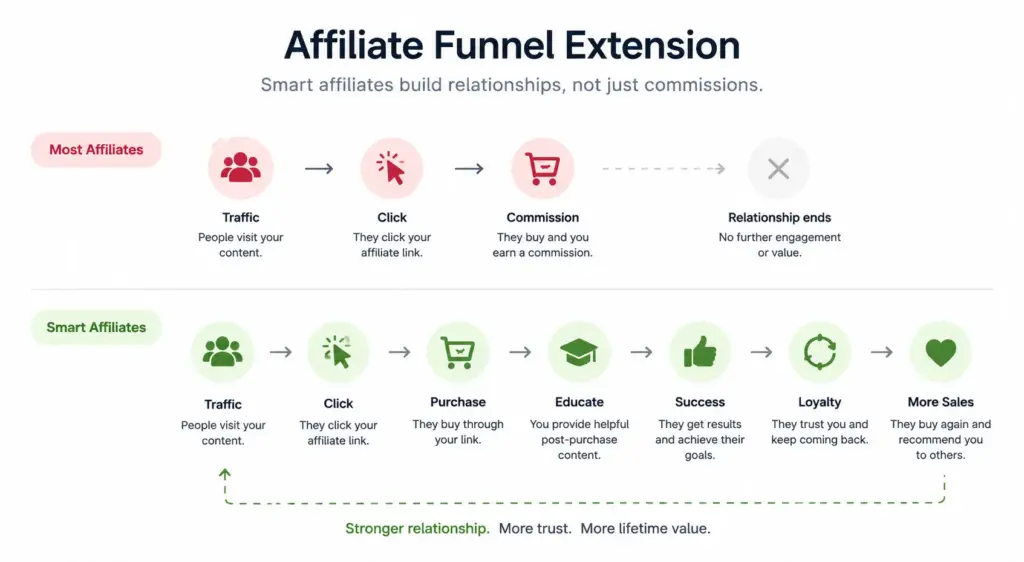
Most affiliates disappear the moment someone clicks their link. The sale happens, the commission comes in, and that’s the end of the relationship. This is a massive missed opportunity.
Post-purchase content keeps you relevant after the transaction. It shows your audience that you care about their experience with the product, not just your payout.
Think about what your audience needs after they buy:
- Product tutorials that show them how to get the most out of a tool or product
- Set up guides that reduce friction during the onboarding process
- Troubleshooting resources that help when things don’t go as expected
- Best practices and use cases that help them see possibilities they hadn’t considered
This kind of content also improves your SEO. These are questions people actually Google. And when your audience finds helpful answers on your site, they bookmark it, share it, and come back.
4. Segment your audience based on interests
Not everyone on your list wants the same thing. A subscriber who came in through a post about WordPress hosting has different needs than someone who found you through a review of an Amazon kitchen item. Sending both of them the same generic newsletter is a fast way to lose both of them.
Audience segmentation is one of the most effective and top customer retention strategies because it makes every communication feel personal and relevant.
Group your subscribers by niche, behavior, or purchase intent. Most email platforms let you tag subscribers based on which lead magnet they downloaded, which links they clicked, or which pages they visited. Use that data.
Once you have segments, send more targeted recommendations.
Your WordPress audience gets hosting deals, theme comparisons, and plugin reviews. Your Amazon audience gets product comparisons, kitchen tools, and feature introductions.
The more relevant the recommendation, the higher the chance of a click and a conversion.
5. Keep updating existing content
Publishing a product review and never touching it again is one of the quietest ways to lose credibility.
Products change. Pricing changes. Better alternatives come out. Policies shift. If your readers follow a recommendation that’s two years old, they lose trust in you, and rightfully so.
Refreshing your content regularly is one of the most underrated strategies for customer retention in affiliate marketing.
Go through your top-performing posts periodically and ask:
- Is this product still the best recommendation for this problem?
- Has the pricing or feature set changed significantly?
- Are there newer alternatives worth mentioning?
- Are any of the affiliate links broken or redirecting incorrectly?
Removing outdated recommendations and updating comparisons shows your audience that your content is alive and trustworthy. It also maintains your search rankings, since Google tends to favor recently updated content in competitive niches.
For product review website owners and Amazon affiliates, content updates are especially important because product availability and specifications change frequently.
That’s why you need to use a WordPress affiliate marketing plugin, such as AzonPress, that supports Amazon Creators API, so that you can fetch live product data without any manual work.
Get access to our exclusive offers and pro tips!
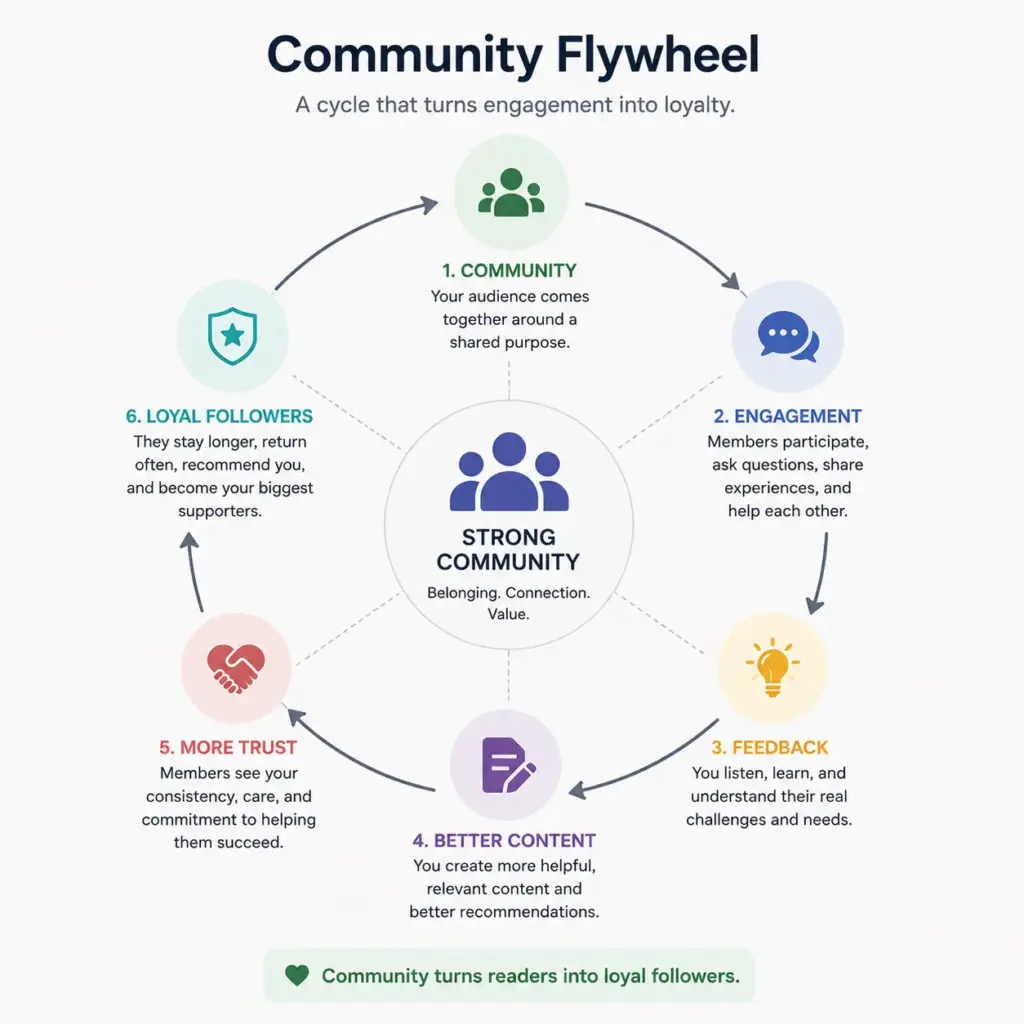
6. Create a loyalty or community experience
People don’t just return for information. They return for belonging.
When your audience feels like they’re part of something, a community, a group, a club, they have a reason to come back that goes beyond just finding a good deal.
This emotional connection is one of the most powerful types of customer retention tactics available to content creators.
You don’t need a sophisticated membership platform to create this. A private Facebook group, a Discord server, or even a members-only section of your site can work well. The key is to make your most engaged audience feel like they have access to something exclusive.
Member-only content like early access to reviews, private deal alerts, or exclusive resource libraries gives loyal followers a reason to stay connected.
For bloggers and niche site owners, this type of community also becomes a research channel. You learn exactly what your audience is struggling with, which helps you create better content and make more relevant recommendations.
7. Offer rewards or referral incentives
Most people think loyalty programs are only for e-commerce brands, but affiliate marketers can tap into the same psychology without owning a single product.
You may not control the merchant’s pricing, but you do control your own ecosystem. Offering small rewards for loyal engagement, such as a free resource, exclusive content access, or early access to your next guide, gives your audience a reason to stay connected beyond just finding a good deal.
The more powerful play, though, is referral incentives. Encouraging your existing subscribers to refer friends in exchange for something valuable turns your loyal audience into a growth channel.
This is where affiliate marketing and referral marketing overlap in a really interesting way. If you want to understand how the two models compare and complement each other, this breakdown of affiliate marketing vs. referral marketing is worth reading.
The core idea is simple: people who already trust you are your best promoters. Give them a small reason to spread the word, and you get new subscribers who arrive pre-warmed by someone they already trust. That makes retention easier from day one.
Common customer retention mistakes affiliates make
Even with the best intentions, many affiliate marketers quietly push their audience away through habits they don’t notice until the damage is done.
Here are some common customer retention mistakes that you should avoid as an affiliate marketer.
Promoting too many products
When every email, every post, and every recommendation is a new product pitch, your audience stops trusting your judgment. It starts feeling like a sales catalog rather than expert advice. Stick to fewer, better recommendations.
Quality over quantity is a strategy that always pays off in retention.
Ignoring existing subscribers
Building your list and then sending emails only when you need commissions is a retention killer. Your audience can sense when they’re only being contacted for your benefit.
Consistent, value-driven communication keeps the relationship warm, not just transactional.
Sending generic recommendations
If your email to 5,000 subscribers looks the same regardless of who’s reading it, you’re leaving engagement and revenue on the table.
Generic recommendations are one of the biggest customer retention mistakes in affiliate marketing. Take the time to segment and personalize, even if it’s just at a basic level.
Prioritizing commission over customer value
High-commission products that don’t actually serve your audience are a short-term gain and a long-term loss. Every time you recommend something that lets your readers down, you lose a piece of their trust.
How to improve customer retention almost always comes back to this: put your audience’s outcome first, and the revenue follows.
Wrapping up
Getting traffic and clicks is a start. But affiliate marketing gets truly profitable when your existing audience keeps coming back, keeps engaging, and keeps buying through your recommendations.
The customer retention strategies I’ve suggested in this guide aren’t complicated. They’re about trust, relevance, and consistency.
Recommend products that actually work. Stay in touch through email. Create content that helps people after the sale. Personalize where you can. Keep your content fresh. Build community. Listen to your audience.
None of this happens overnight. But every step you take toward better retention pays off repeatedly, not just once.





Read Similar Blogs
We build lasting partnerships to boost and manage revenue growth


Leave a Reply