

Faceless Affiliate Marketing: 9 Ways to Do Without Showing Your Face


Let’s be real. Not everyone wants to become the next YouTube star or Instagram influencer. Some people just want to make money online without putting their faces on the internet.
And honestly? That’s completely valid. Faceless affiliate marketing is booming right now, and it’s not hard to see why. Privacy-first creators are on the rise.
And with short-form content formats and AI tools making content creation easier than ever, you don’t need to be “on camera” to build a real income online.
Affiliate marketing is open to everyone. It doesn’t matter whether you want to be in front of the camera or do affiliate marketing without showing your face.
People don’t care who you are; they care about what you’re offering. Today, people are earning huge amounts of money while remaining anonymous.
In this article, we’ll discuss 9 powerful ways to do faceless affiliate marketing without ever compromising your privacy.
What is faceless affiliate marketing?
Faceless affiliate marketing means promoting products or services online and earning affiliate commissions without ever revealing your face or personal identity.
Instead of building a personal brand around who you are, you build around a niche, a topic, or a content format. The product does the talking. Your content does the selling. You stay anonymous.
But before we go further, let’s clear up a couple of myths that keep tripping people up:
Myth #1: “It’s passive income from day one.” No, it’s not. There’s upfront work involved: writing content, building traffic, and testing offers. The passive part comes later, after you’ve put in the effort.
Myth #2: “AI will do everything for me.” AI is a tool, not a strategy. It can speed up your workflow, but it can’t replace good judgment, niche research, or understanding what your audience actually needs.
So what actually matters in faceless affiliate marketing?
Two things: distribution (how people find your content) and conversion (how well your content turns visitors into buyers). Get those two right, and the face thing becomes totally irrelevant.
Can you do affiliate marketing without showing your face?
“Can I do affiliate marketing without showing my face?”
This is a common question, especially among beginners who are mostly camera-shy and uncomfortable talking in videos.
So the answer is, yes, absolutely — you can 100% do affiliate marketing without showing your face, and plenty of people are already doing it successfully and earning huge money as well.
You don’t need to be on camera or even use your name. All you need is quality content, strategic promotion, traffic, and affiliate links.
Some profitable faceless affiliate marketing niches include digital products (online courses, ebooks), home fitness equipment, pet supplies, gardening tools, software, and more.
These niches enable you to promote products without revealing your face in videos, posts, or websites.
How faceless affiliate marketing works (Simple 3-step funnel)
Here’s the simplest way to think about it:
Step 1 — Traffic: People find your content through Pinterest, Google search, YouTube, or social media.
Step 2 — Content: You deliver value, a tutorial, a comparison, or a list that matches what they were looking for. This is where trust gets built.
Step 3 — Monetization: Inside the content, you include affiliate links, direct readers to a landing page, or capture emails for future promotions.
That’s the whole model. Traffic → Content → Commission.
Everything else, the platform you pick, the niche you choose, the tools you use, is just a variation of this core loop.
How to do affiliate marketing without showing your face
Chances are equally good when you decide to do affiliate marketing anonymously. Anyone can learn how to create good content and promote affiliate products.
There are many proven ways of doing affiliate marketing faceless. Let’s uncover the 9 best ways to do affiliate marketing without showing your face. Pick one that fits your strengths and commit to it.
SEO blog websites
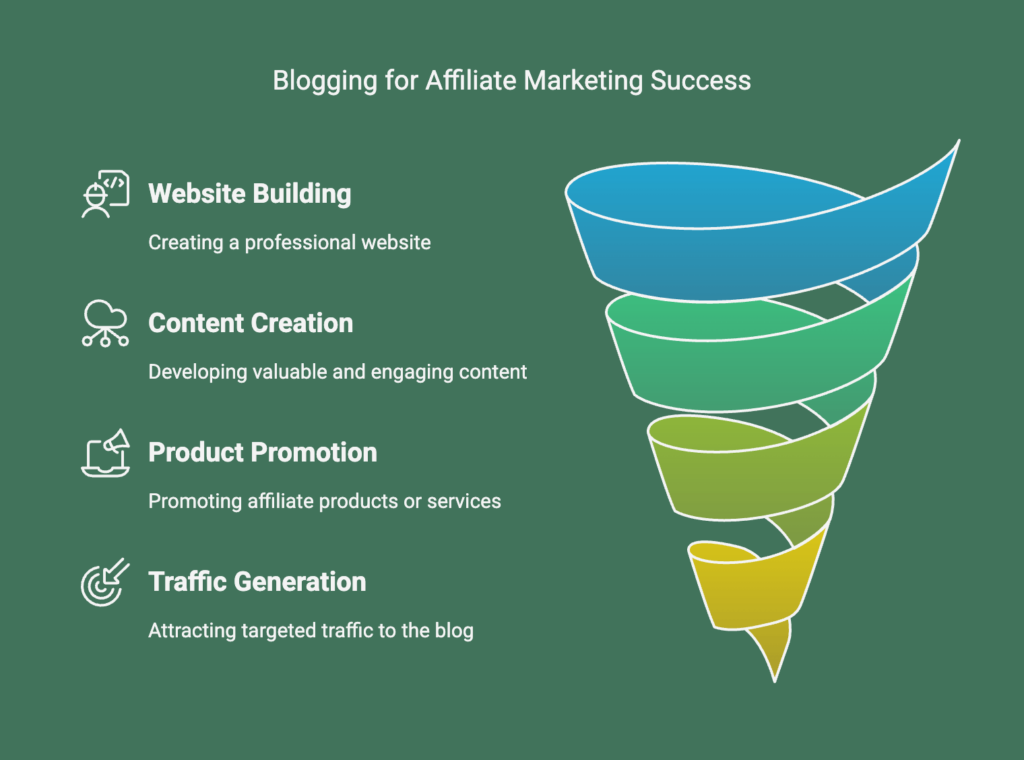
If you want something that can earn while you sleep six months from now, blogging is probably the most reliable option in the faceless affiliate marketing space.
The idea is straightforward: choose a profitable niche, build a review website, write helpful content or comparison targeting buyer-intent keywords, promote affiliate products, and earn commissions.
If you don’t know how to choose your niche, go through this on how to choose the best niche for affiliate marketing.
For example, instead of writing a generic article about “microphones,” you’d write something like “Best Budget Microphones for Beginners Under $50.”
That kind of specific, buyer-focused content targets people who are already close to purchasing, and that’s exactly who you want reading your affiliate posts.
When someone searches “best standing desk under $300” and lands on your post, they don’t care who you are. They care whether your recommendations are trustworthy.
However, blogging doesn’t require revealing your face or any personal information. Your website domain name and logo are enough to represent your niche.
Monetization options:
- Amazon Associates (great for physical products)
- SaaS affiliate programs (often higher commissions)
- Digital product platforms like ShareASale or Impact
This is one of the best faceless affiliate marketing niche strategies because once a blog post ranks, it can send traffic for months or even years without much upkeep.
Tools to get started:
- WordPress for building affiliate blogs
- Ahrefs or Ubersuggest for finding keywords and researching what people are searching for
The main thing to know: blogging takes time. Don’t expect overnight results. But if you stay consistent (because it takes time for your blog to rank), it’s one of the most rewarding long-term plays out there.
[Check out our full guide here on affiliate marketing blogging.]
YouTube review videos
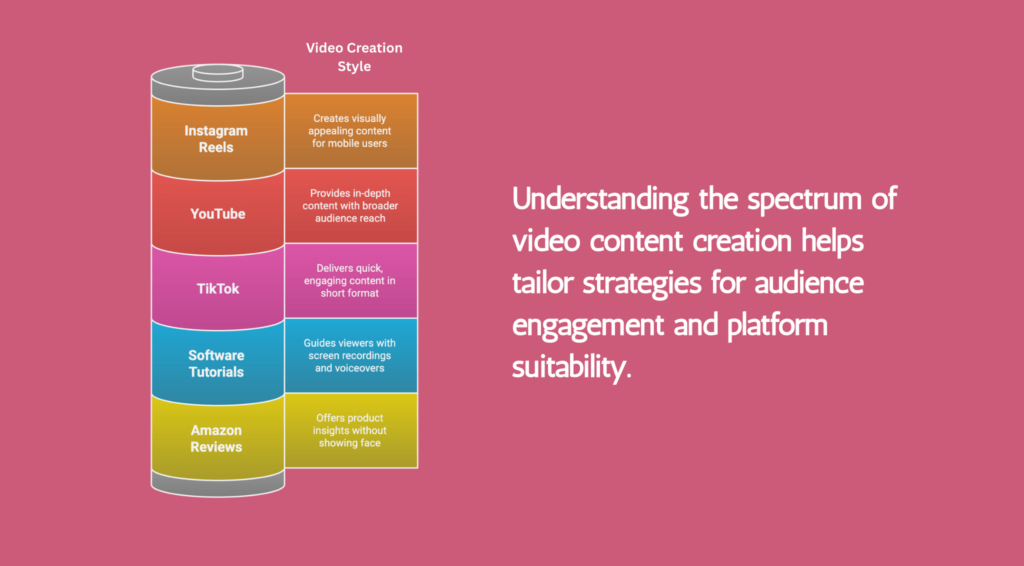
Creating videos is another great way to do affiliate marketing without showing your face. You might be wondering: How is that even possible?
Yes, you can run a YouTube channel without showing your face. Plenty of creators are doing exactly that, and doing it well.
The format is simple: use stock footage, screen recordings, AI voiceovers, or text-based visuals to create informative videos. You never appear on camera. Viewers don’t miss it if the content is genuinely useful.
Most people assume making videos means being on camera, talking to your audience, and performing like a YouTuber. But that’s not always the case, especially when it comes to reviewing videos and tutorials.
Content types that work well:
- “Top 5 tools for “[task name]” roundups
- Software tutorials and walkthroughs
- Product reviews using screen recordings and stock visuals
For example, if you want to do faceless Amazon affiliate marketing, you can:
- Pick products from Amazon
- Create review or unboxing videos
- Add your affiliate links in the video description
A product review video or an unboxing video doesn’t require your face or identity.
These types of videos work well because people who are searching for a review video on YouTube are often ready to buy; your videos just help them decide.
Monetization path:
- Start with affiliate links in the video description
- As your channel grows, you can layer in ad revenue from the YouTube Partner Program
You can also create tutorials using screen recordings, video animations, or voiceovers to walk viewers through tools, apps, or processes.
Not only YouTube, but you can also post them on platforms like TikTok or even Instagram Reels.
This is one of the most popular faceless affiliate marketing examples right now, especially in the tech industry, for recommending digital products or software.
Tools to use:
- ElevenLabs: Generate natural-sounding voiceovers without recording yourself.
- CapCut: Straightforward editing even for beginners.
TikTok and reels
Short-form video content is one of the fastest ways to drive traffic right now, and you don’t need to be on camera to make it work.
Faceless TikToks and Instagram Reels using text overlays, B-roll footage, screenshots, and trending audio are pulling in millions of views every day.
This format is especially well-suited if you’re wondering whether you can do affiliate marketing without showing your face in a way that feels modern and relevant.
Examples that perform well:
- “3 websites that actually pay you money”
- “Best AI tools for students in 2026”
- “How I made my first affiliate commission without a website”
Notice the pattern: they’re curiosity-driven, specific, and promise a clear payoff. That’s the formula.
The most important thing: Your hook. You have about 2 seconds to stop someone from scrolling. Nail the first line of text on screen, and the rest is much easier.
Pinterest Affiliate Marketing
Pinterest is massively underused by affiliate marketers, especially if you’re trying to stay anonymous. And that’s honestly a missed opportunity.
Here’s the thing: Pinterest is a search engine, not just a social platform. People go there looking for ideas, product recommendations, and solutions. That’s a perfect environment for affiliate content.
You create visually appealing pin graphics (no face, no video, just design), link them to your blog, a landing page, or in some cases directly to an affiliate offer (depending on the program’s rules), and let the traffic flow.
Pinterest works especially well in these faceless affiliate marketing niches:
- Home decor and interior design
- Fitness and wellness
- Personal finance and budgeting
- Digital products and online tools
One tip that makes a big difference: Focus on search-based pins targeting specific keywords rather than just making pretty graphics. Pins that answer a question or solve a problem tend to outperform purely aesthetic ones.
Tools like Canva make pin creation easy, even if you have zero design experience.
Podcast

A podcast is a solid way to start anonymous affiliate marketing. This is an ideal format for those who love talking and enjoy in-depth discussions.
Podcast as a method of faceless affiliate marketing is a bit more difficult than other ideas. Because you’re sharing information and promoting products or services through audio content. So, it’s quite difficult to build trust and credibility.
What’s the solution then?
You should pick products or services that fit your podcast topic or niche. Naturally weave the recommendations into the conversation and provide insights that educate your listeners.
Most podcast platforms allow promoting affiliate links in the show notes. If you’ve got a website, you can transcribe the episodes and insert your links there.
Email newsletter funnels
Building an email list is one of the smartest moves you can make to do affiliate marketing without showing your face, and it doesn’t require a personal brand or a large following to get started.
Here’s the basic setup: you create a free lead magnet (a helpful PDF guide, a template, a resource list, anything your audience would actually want), promote it through your blog or social content, and collect email addresses in exchange.
Once someone’s on your list, you can send regular emails with tips, recommendations, and product roundups, with affiliate links naturally woven in.
Why this works so well:
- Email converts better than most other channels
- You own the list (unlike social media followers)
- It doesn’t matter what you look like. What matters is whether your emails are useful.
Over time, you can set up automated email sequences that promote affiliate products on autopilot. Someone signs up, gets your welcome series, and you’re earning commissions while doing absolutely nothing.
If you can build an email list, it’ll work like an asset that boosts your marketing efforts. The average email marketing ROI ranges from $36 to $40 for every dollar you spend.
Tools: FluentCRM, ConvertKit, or Mailchimp all work well for building and automating email funnels.
Get access to our exclusive offers and pro tips!
Online courses
You can be an anonymous affiliate marketer by promoting products through online courses. It’s a smart way to teach your audience while earning commissions as well.
Structure your course into two parts: a free version for basic concepts and a paid version for more advanced, in-depth content. As you teach, you can naturally recommend tools, software, or services that are closely relevant to the topic, and include your affiliate links.
This approach lets you earn in two ways: by selling the course itself and by earning commissions through your affiliate promotions.
Best of all, you can create the entire course without ever showing your face. Use screen recordings, voiceovers, AI-generated narration, or even animated videos to keep things professional and completely faceless.
Other social media
Who doesn’t have a social media account today? Let’s admit that most people have at least one account on a popular social media platform like Facebook, Instagram, X, Pinterest, etc.
If you’re ready to do faceless affiliate marketing, then you should definitely utilize this opportunity. Anonymous accounts are also getting popular on social media.
But here’s a saying: you can remain anonymous on social media, but it’ll double your work to gain popularity and build trust and credibility with your audience. It’s obvious that people will interact less if you go faceless.
So, it’s very important to have truly engaging content. Also, you’ve got to be very specific about how the product or service will solve their problem.
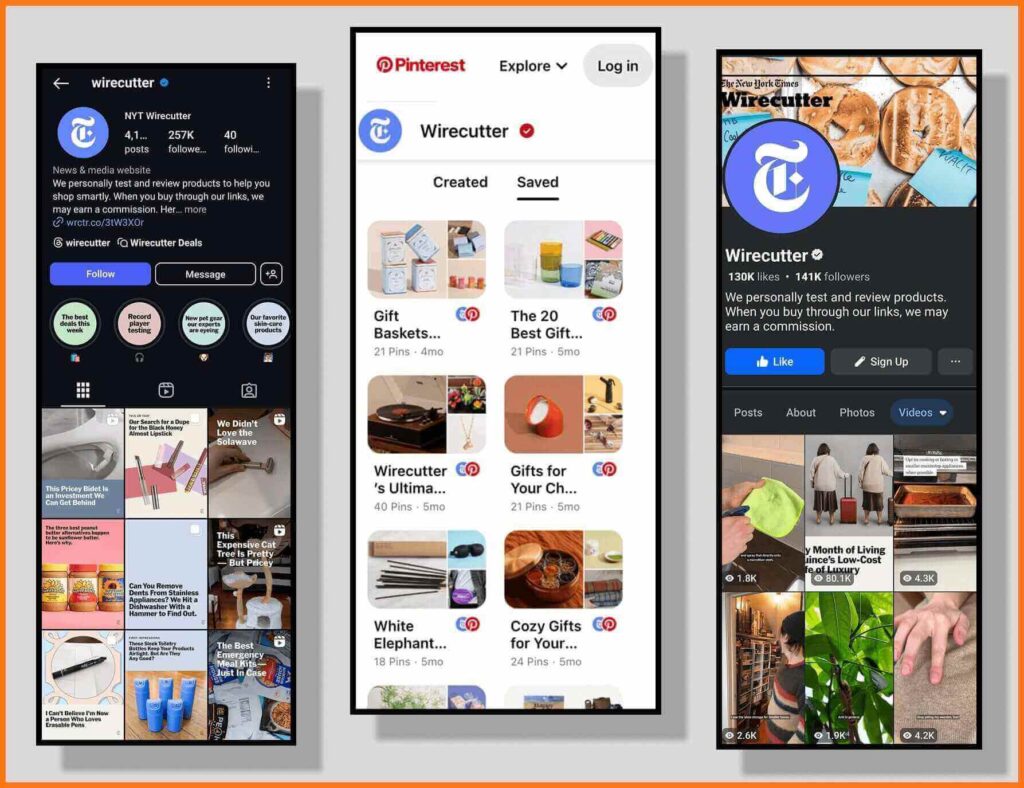
Create informative and visually appealing boards on Pinterest. Use attractive images and quotes on Facebook, Instagram, and X to grab your audience’s attention.
Take the example of Wirecutter; all they do is product reviews on their social channels without revealing their identity. They recommend their affiliate products in a natural and non-intrusive way.
This is one of the most practical answers to the question “Can I do affiliate marketing without showing my face?” because sites like Wirecutter have proven that anonymous, content-driven affiliate marketing works at a massive scale.
Ebooks
Writing an eBook is a powerful and passive way to make money online without ever showing your face. Whether it’s a guide, tutorials, a tips-based book, or a niche-specific resource, you can use eBooks to share valuable information and promote affiliate links at the same time.
For example, if you’re writing an eBook on “How to Start a YouTube Channel,” you could include affiliate links for recommended cameras, editing software, or online courses.
Or think about a “Freelancer Starter Kit” with recommended tools: project management software, invoice platforms, email marketing tools, all with your affiliate links.
Once finished, you can sell the eBook or offer it for free in exchange for email sign-ups; either way, your affiliate links inside the book can keep generating income long after it’s published.
Combine this with an email funnel, and you’ve got a pretty solid system that runs without you ever being “visible.”
Although creating an eBook has never been easy. Do thorough research, show your expertise in writing, and format and design the eBook using tools like Google Docs, Canva, Visme, etc.
You can even use AI tools to help you write and design it faster.

Faceless affiliate marketing: pros and cons
By now, you know what faceless affiliate marketing is and some powerful ways to do that effectively. Let’s take a quick look at some of the pros and cons of doing it anonymously.
Advantages of doing affiliate marketing faceless:
- You can put in much time and effort concentrating on your product marketing instead of self-branding.
- You don’t need to reveal your identity, which is great if you’re camera-shy or value your privacy.
- Negative feedback and criticism won’t hurt you if you go faceless.
- Affiliate marketing without showing your face allows you to explore different industries, markets, and niches as well.
- Not revealing your identity provides a layer of security against hackers and creeps.
- You got the freedom to learn, experiment, and fail in private. No trolling, no negativity.
Disadvantages of faceless affiliate marketing:
- Without a face, it can take longer for people to trust your recommendations, which may reduce conversions.
- Audiences may be skeptical of advice coming from a regular channel instead of a real person.
- Faceless content can feel generic or robotic and less engaging if not done well.
- Many people go the faceless route, so niches like “tech,” “finance,” or “fitness” can be highly saturated.
- In the same niche, other affiliates create engaging content while showing their faces. Therefore, it will require more effort for you to compete with them.
Tools that make faceless affiliate marketing easier
You don’t need to invest in expensive software to get started. Here are the tools worth knowing about, grouped by what they do:
Content creation
- Canva for designing Pinterest pins, blog graphics, ebook covers, and social posts.
- CapCut for editing faceless videos quickly, with built-in templates and text overlays.
AI tools
- ChatGPT for brainstorming content ideas, drafting outlines, and speeding up writing.
- ElevenLabs for generating realistic AI voiceovers for YouTube or video content (no microphone needed).
SEO and research
- Ahrefs for keyword research, competitor analysis, and tracking your rankings.
- Google Trends for spotting rising topics in your niche (free and underused).
Link management
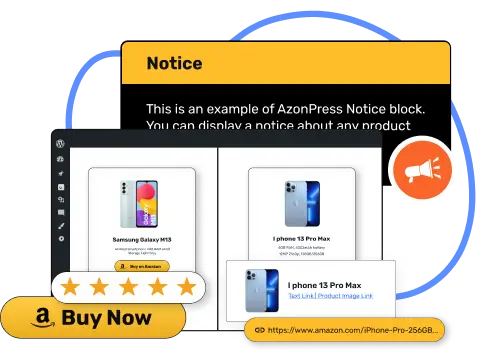
- AzonPress is especially useful for faceless Amazon affiliate marketing; it helps you display products beautifully and manage links without the technical headache.
- Bitly for shortening and tracking affiliate links across different platforms.
Wrapping up
So, can you do affiliate marketing without showing your face? Absolutely, and people are doing it every single day.
The whole premise of faceless affiliate marketing is simple: it’s not about who you are, it’s about the value you deliver. A well-written blog post, a genuinely helpful video, a curated email newsletter, none of these need a face attached to them to work.
What they do need is consistency, the right traffic strategy, and content that actually helps people make decisions.





Read Similar Blogs
We build lasting partnerships to boost and manage revenue growth


Leave a Reply