

Amazon Affiliate Program Requirements: 2026 Eligibility Guide


If you’re about to become an Amazon associate, you must follow the Amazon affiliate requirements because Amazon is rigorous with these rules.
A rising number of people like you want to join Amazon affiliate marketing, as it is one of the largest affiliate programs in the world. Many of them are not aware of the rules and regulations and end up losing their accounts.
Before joining any program, knowing its policy will always keep you a step ahead.
So in this guide, I’ll walk you through the complete Amazon affiliate program requirements, from getting approved to staying compliant once you’re in.
Quick answer: To meet Amazon affiliate program requirements, you need an active website, app, or social media account with real content; you must generate at least three qualifying sales within your first 180 days, and once approved, you have to follow ongoing rules around disclosure, product images, pricing, and promotion. Miss either the eligibility bar or the ongoing rules, and Amazon can reject or close your account.
Key Takeaways from Amazon Affiliate Program Requirements Guide
- Requirements for the Amazon affiliate program are split into two stages: getting approved and staying compliant afterward.
- To qualify, you need a public website, app, or social account with genuine content; there is no minimum traffic number, but real engagement matters.
- The Amazon Associates program requires making 3 qualifying sales within your first 180 days; otherwise, your account will go inactive.
- Once approved, you must disclose your affiliate status, avoid shortening links, only promote approved products, and follow Amazon’s image, logo, and pricing rules.
- A privacy policy is mandatory before Amazon approves your site.
- Break the rules, and you risk losing your account and any unpaid commissions.
What is Amazon Associates?
Amazon affiliate programs, also known as Amazon Associates, are the biggest dominators in the affiliate marketing space because of their reputation and reliability.
It’s the best affiliate program for beginners to join. If you’re a content creator, blogger, marketer, or YouTuber who wants to monetize web traffic to your pages by advertising Amazon products, Amazon Associates is an excellent choice.
To get approval to become an Amazon affiliate, you just need to register for this program. Once you’re approved, you’ll get unique links to promote Amazon products to your audience.
You’ll earn a referral commission every time the customer purchases something from Amazon using your links. Depending on the product category, the commission range could be 1-20%.
So it’s worth checking Amazon’s own commission rate card regularly since it changes without notice
Eligibility at a glance
Here are some Amazon affiliate program requirements at a glance to participate:
| Requirement | What it means | Where people fail |
|---|---|---|
| Age and tax ID | 18 or older, valid tax ID or SSN | Applying before having tax info ready |
| Website | Owned by you, 10+ original posts, publicly accessible | Thin content, private/restricted pages |
| Mobile app | Free on Google Play, Apple, or Amazon App Store | The app resembles Amazon’s own shopping app |
| Social media | Active public account, business profile for FB/IG | Personal-only pages, low engagement |
| Sales requirement | 3 qualifying sales within 180 days | No consistent traffic to convert |
| Disclosure | Clear affiliate disclaimer on site | Buried in the footer only, vague wording |
| Privacy policy | Covers data collection and use | Generic two-line placeholder policy |
Core eligibility requirements for the Amazon affiliate program
Although it’s free to join, you must meet specific eligibility guidelines. These guidelines ensure affiliates align with Amazon’s standards and can effectively promote products.
Age and tax ID requirements
You must be 18 years or older to register as an Amazon Associate or have a parent or guardian register on your behalf. You’ll also need a valid tax ID or Social Security number during signup, since Amazon reports affiliate earnings for tax purposes. Have this ready before you apply; a stalled application over missing tax info is an easy, avoidable delay.
Website requirements
Most Amazon affiliates promote products through a blog or website. To qualify, your site must:
- Be owned by the applicant
- Have at least 10 original blog posts, with the latest one published within the past 60 days
- Publicly accessible; private or restricted access platforms do not qualify
- Comply with Amazon’s content guidelines
Mobile app requirements
App versions of websites can also participate. Your app must:
- Be available for free in the Google Play, Apple, or Amazon app stores
- Not look or function like Amazon’s own shopping app
Social media requirements
Social media influencers are eligible too, with a few conditions:
- You must have an active and public Facebook, Instagram, X, YouTube, or TikTok account
- A business account is required for Facebook and Instagram
- Amazon looks for an established following with real engagement, in most cases, at least 500 organic followers
Content quality standards
Beyond the platform itself, Amazon reviews the overall experience. Your content should be original, regularly updated, and free of placeholder or “under construction” pages. Amazon evaluates navigation, design, and content quality as part of approval, so a rushed, thin site is one of the more common rejection reasons even when the technical requirements are met.
Pro Tip: Don’t Make These 33 Fatal Affiliate Marketing Mistakes
Amazon affiliate program requirements to follow once you’re approved
Getting approved is only half the equation. Once you’re in, you’re operating under Amazon’s rules for as long as you stay active. These are the requirements for affiliate marketing under Amazon specifically, and they get enforced.
- Disclose that you’re an Amazon affiliate
- First 3 sales within 180 days
- Avoid shortening Amazon affiliate links
- Only promote approved products
- Use product images correctly
- Use brand logos correctly
- Correctly display the product prices
- Promotional limitations
- Add a privacy policy
- Know the social media promotion rules
If you violate any of these Amazon affiliate rules or requirements, you are likely to get banned and lose all of your unpaid commissions.
So, to comply proactively and avoid the inconvenience, it’s better to understand the Amazon affiliate program requirements before you join the program.
1. Disclose that you’re an Amazon affiliate
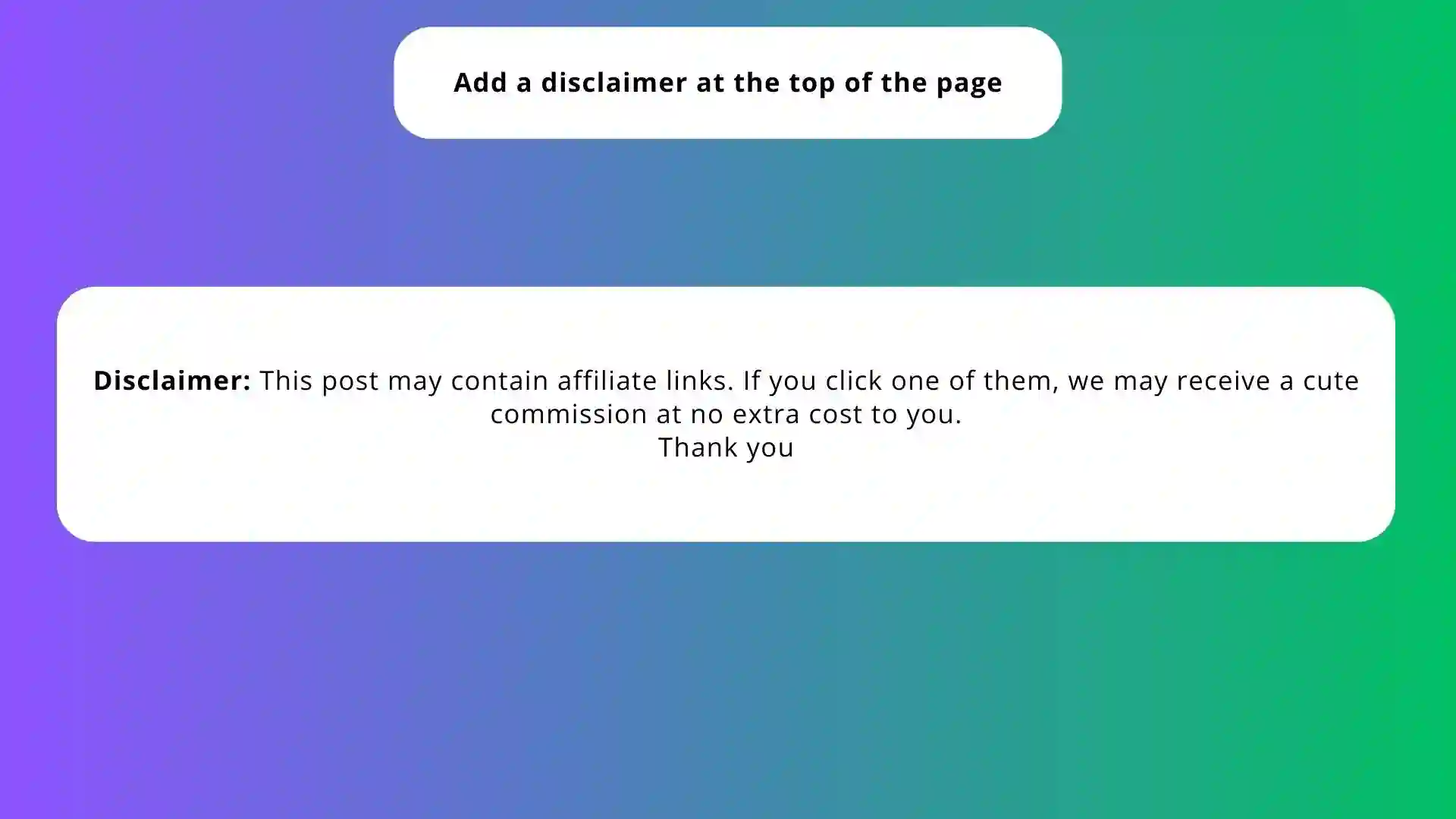
Amazon strictly requires you to identify yourself as an affiliate. It’s one of the mandatory Amazon Associates requirements to add a disclaimer in a prominent place, announcing yourself as a member of the Amazon Associates program.
This matters for both Amazon and the Federal Trade Commission (FTC). Since you’re promoting products from a third party, your audience needs to know you’re not the owner, you’re an affiliate earning a commission on each sale.
Since you’ll be promoting and selling products from third parties, it’s important to let your audience know that you’re not the owner of the products. You’re an affiliate, and you earn a commission on each sale.
For better understanding, Amazon also offers the following disclaimer that you can use:
[Insert site name] is a participant in the Amazon Services LLC Associates Program, an affiliate advertising program designed to provide a means for sites to earn advertising fees by advertising and linking to [insert applicable site name].
You don’t need to use this exact wording; just make it clear you earn commission from each sale.
It used to be enough to tuck this into the footer or About page. These days, for better visibility, putting a brief version near the top of the article works better.
Here are some perfect Amazon Affiliate Disclosure Examples you can copy-paste
2. First 3 sales within 180 days
This is one of the most important Amazon affiliate requirements to get right early. You need to generate at least three qualifying sales within your first 180 days as an associate. Miss that window, and Amazon closes your account.
They’ll let you re-apply once you’re generating steady traffic again, but Amazon only reviews your application once you make that first sale; otherwise, it sits pending indefinitely. Consistent traffic that actually converts matters more here than raw visitor count.
AzonPress helps with exactly this bottleneck through its Zero API feature, letting you build and promote Amazon product displays and start driving sales before you even have API access.
3. Avoid shortening Amazon affiliate links
Link masking is strictly prohibited, since Amazon emphasizes transparency in how affiliate links are presented. Use Amazon’s affiliate links exactly as provided. Don’t run them through a link shortener or alter them in any way, they need to direct users clearly and correctly to Amazon’s site.
4. Only promote approved products
Stick to products approved under the Amazon Associates program. Don’t promote anything obscene, violent, sexually explicit, discriminatory, or fake.
You also can’t run promotional strategies targeting children under 13.
5. Use product images correctly
The Amazon affiliate requirements for using product images say you must display the images as listed on Amazon. Hosting your own copies isn’t allowed; you can’t download an image and re-upload it to your own site.
Each image needs to function as a hyperlink pointing to the correct product detail page on Amazon. Any kind of image modification will trigger a violation of the Amazon affiliate guidelines, resulting in serious legal implications.
6. Use brand logos correctly
Only use Amazon logos and badges provided directly by Amazon through the Amazon Associates SiteStripe, Product Advertising API, or other Amazon-authorized resources.
Don’t modify, alter, or change the logos in any way in terms of color, font, or proportion, or add or remove any aspects of the Amazon mark. Use them exactly as given.
Check out Amazon Trademark Guidelines for more rules and regulations on using logos in proper way.
7. Correctly display the product prices
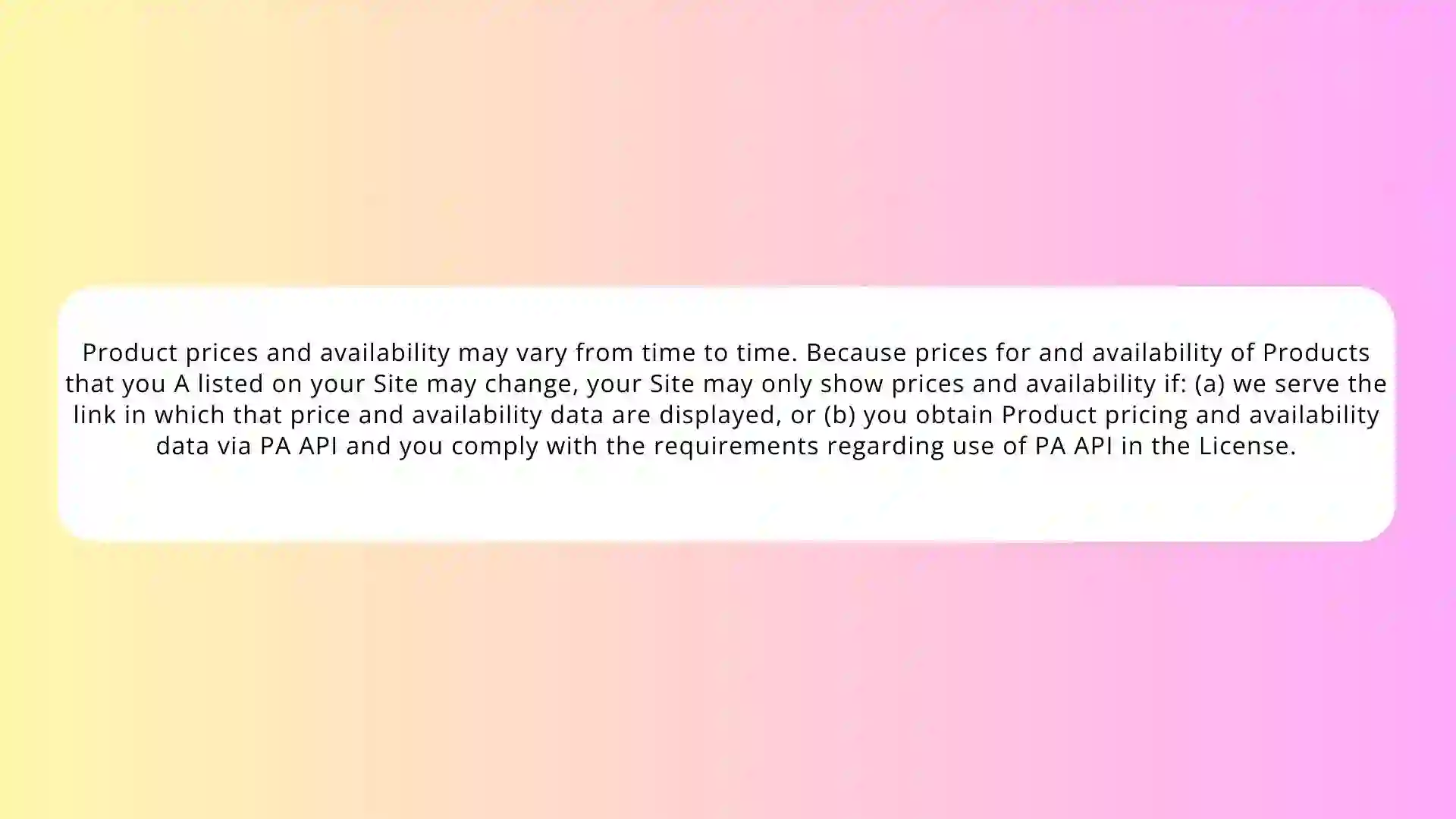
Another Amazon Associates requirement is that it doesn’t allow you to display static pricing information. Because prices often fluctuate unwittingly. There’s no realistic way to manually track every change.
To avoid any wrong information about the pricing, you can add a call-to-action button named “Check on Amazon,” which redirects the user directly to the product page.
The more reliable fix is connecting to the Amazon Creators API, which pulls current pricing directly from Amazon and updates it automatically whenever the listing changes.
This is one of the Amazon affiliate requirements that’s genuinely easier to solve with the right setup than to manage by hand.
AzonPress connects to the Creators API and handles this automatically, so you can build comparison tables and product showcases without manually re-verifying pricing every few days.
8. Promotional limitations
A few restrictions apply to how you can drive traffic to your affiliate links:
- You can’t use any paid advertising to drive traffic directly to Amazon, including PPC ads, paid search placements, or other paid traffic sources.
- Do not include Amazon affiliate links in email marketing campaigns, eBooks, or newsletters without explicit permission from Amazon.
- You can’t share your affiliate links with any private Facebook group or in private messages on social media.
- You’re only allowed to share your affiliate links on your content, website, YouTube channel, and Facebook page.
- Do not use incentives to drive traffic to Amazon affiliate links. This includes offering cash-back, rewards, points, or any other benefit in exchange for clicking on affiliate links or making purchases.
9. Add a privacy policy
Another key requirement for Amazon’s affiliate program is a comprehensive privacy policy section on the website. Add a privacy section in a noticeable place, mostly suitable for the footer section.
The privacy policy section should specify,
- What information do you collect
- How it’s collected
- Who you share it with
- How do you use it
- How do you protect it
It should declare that you and your website commit to adhering to all applicable privacy-related laws.
10. Know the social media promotion rules
Beyond the eligibility bar for having a social account, there are ongoing rules for how you promote once you’re active. Disclosure still applies here just as much as on a blog, using a clear “#ad,” “#promotion,” “#sponsored,” or “#amazonassociate” tag on platforms like Instagram or TikTok, not a vague or buried mention.
You also can’t imply Amazon endorses or sponsors you personally; your relationship is strictly affiliate, not a partnership.
Each platform has its own posting norms too, so what’s compliant on YouTube description boxes doesn’t automatically transfer to Instagram Stories.
Platform-specific rules:
- Instagram: Put your disclosure in the caption too, not just your bio
- YouTube: Include verbal and written disclosure in videos
- Pinterest: Add a disclosure to pin descriptions
- TikTok: Disclose in both the video and the bio
Get access to our exclusive offers and pro tips!
Commission structure and cookie duration
Commission rates vary by product category and can change without notice, so it’s worth checking Amazon’s current rate card rather than relying on a number you saw a year ago.
One detail that trips people up: Amazon’s cookie duration only lasts 24 hours, but it can be extended to 90 days also. If someone clicks your link and buys within that window, you get the commission.
What happens if you break the rules?
So, what happens when you can’t meet the Amazon affiliate program requirements or break any rules?
Amazon can suspend or terminate your account for a material breach of the operating agreement, and in cases of fraud, deception, or repeated abuse, termination can happen immediately without a cure period.
If your account is terminated for a policy violation rather than simple inactivity, you generally cannot rejoin the Associates program without Amazon’s advance authorization; reapplying on your own often gets rejected outright.
Any unpaid commissions at the time of a violation-based termination are typically forfeited. This is exactly why understanding Amazon affiliate program rules before you scale your content is worth far more than fixing a violation after the fact.
Common reasons applications get rejected
If you’re wondering what the requirements for Amazon affiliate approval are that people miss most often, it usually comes down to a handful of repeat issues:
- Thin content, fewer than 10 original posts or pages that read as filler
- Private or restricted site access during Amazon’s review
- Missing or vague privacy policy
- Social accounts with low engagement or hidden follower counts
- Site design that looks unfinished or unprofessional
- Attempting to reapply too soon after a rejection without addressing the original issue
Wrapping up
However, there are more Amazon affiliate requirements that must be followed as an affiliate. It’s not only about making money by promoting products. It’s about doing so by following the rules and regulations.
You shouldn’t do anything that violates the rules. Otherwise, you’ll have to suffer with your account.
So be a part of the Amazon Associates program, obey the rules, and start earning commissions on every sale.





Read Similar Blogs
We build lasting partnerships to boost and manage revenue growth



Leave a Reply