

Affiliate Marketing vs Amazon FBA: Which One to Choose?


Let’s be honest. You’ve probably spent hours going down the rabbit hole of “how to make money online” and kept landing on two options: affiliate marketing and Amazon FBA.
Both promise financial freedom. Both have real success stories. And both have people who tried, failed, and warned others to stay away.
So which one is actually worth your time and money?
If you’re a beginner trying to build an online income stream, this guide is going to give you the clearest, most honest breakdown on affiliate marketing vs Amazon FBA you’ll find anywhere.
No fluff, no hype. Just a real comparison so you can make the right call for your situation.
Key Takeaways
Here’s everything that matters from this guide, distilled into one place:
- Affiliate marketing means promoting other people’s products and earning a commission, no inventory required
- Amazon FBA (Fulfillment by Amazon) means selling physical products while Amazon handles storage, shipping, and customer service
- Both are legitimate ways to build online income, but they suit very different types of people
Cost and Risk
- Affiliate marketing can be started for as little as $50 to $200, making it one of the most accessible online business models
- Amazon FBA typically requires $1,500 to $5,000 upfront before you see any real return
- Affiliate marketing carries minimal financial risk, while FBA exposes you to inventory losses, Amazon fee changes, and cash flow problems
Earnings and Growth
- FBA sellers can generate higher revenue faster, but profit margins shrink significantly after fees, ads, and inventory costs
- Affiliate marketers grow slower but often keep a much higher percentage of what they earn
- Always focus on profit, not revenue. A $30,000 FBA month and a $3,000 affiliate month can sometimes leave you with the same take-home
Time and Effort
- Affiliate marketing is a content and SEO game that rewards patience and consistency over months
- Amazon FBA is an operational business that demands active management of products, suppliers, and advertising
- Neither is truly passive in the beginning, but affiliate content has stronger long-term passive income potential
Who Should Choose What
- Go with affiliate marketing if you are a beginner, a content creator, or someone with a tight budget who wants low-risk income
- Go with Amazon FBA if you have startup capital, love the idea of building a product brand, and are comfortable with business operations
- Your decision should come down to your budget, your skills, your risk tolerance, and your long-term goals
Quick comparison: affiliate marketing vs Amazon FBA
The difference between affiliate marketing and Amazon FBA at a glance:
| Feature | Affiliate Marketing | Amazon FBA |
|---|---|---|
| Startup cost | Low ($50 – $200) | Medium to High ($1,000–$5,000+) |
| Risk level | Low financial risk | High risk of unsold inventory |
| Earning potential | Lower per sale, commission-based | Higher per sale, scalable |
| Inventory Needed | No | Yes |
| Customer Support | No | Handled by Amazon |
| Scalability | Traffic-based | Product and logistics-based |
| Passive Income | High potential | Moderate |
| Marketing | Content marketing, SEO, social media | PPC, listing optimization, campaigns |
| Product Ownership | No ownership, promote others’ products | Own products, full control |
| Best For | Content creators, beginners | Capital-ready entrepreneurs |
What is affiliate marketing?
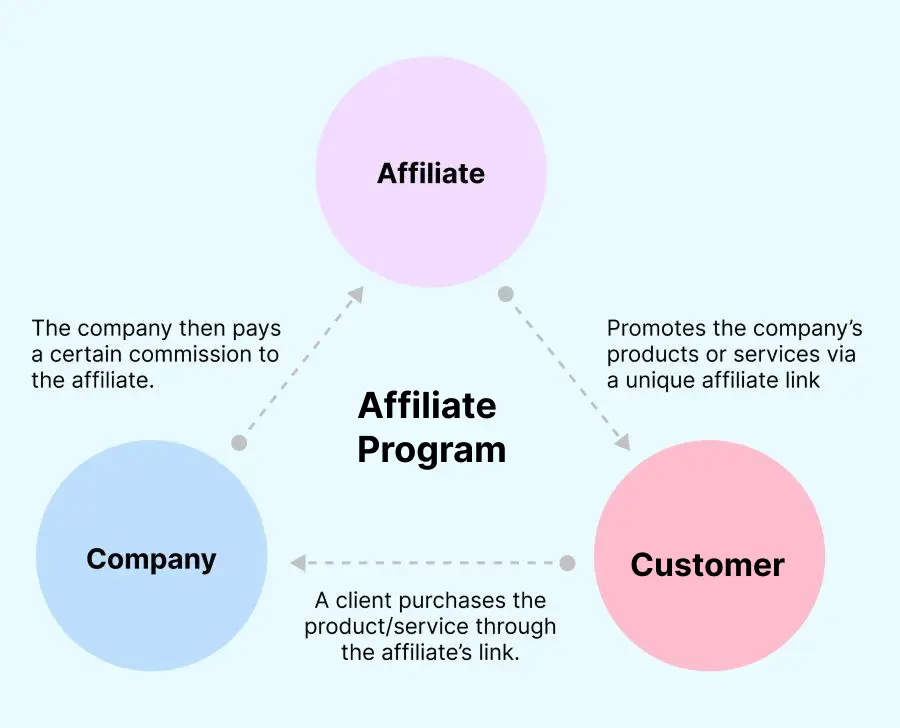
Affiliate marketing is one of the simplest online business models out there. You promote someone else’s product, and when someone buys through your unique link, you earn a commission.
That’s it. No products to create, no warehouse to manage, no shipping labels to print.
It’s the kind of business you can genuinely start from your laptop with very little money, which is exactly why so many beginners are drawn to it.
How affiliate marketing works
The process is pretty straightforward:
- Promote products from companies or affiliate networks like Amazon Associates, ShareASale, or ClickBank using a unique tracking link.
- Earn a commission per sale whenever someone clicks your link and completes a purchase, typically ranging from 3% to 50% depending on the niche.
- No inventory or shipping is ever involved, because you’re simply the middleman connecting a buyer to a seller.
Common affiliate marketing channels
Different types of affiliate marketers use a variety of platforms to drive traffic and earn commissions:
- Blogs are one of the most popular and sustainable channels, especially when combined with SEO.
- YouTube lets you review or recommend products in video format and drop affiliate links in descriptions.
- Pinterest works surprisingly well for visual niches like home decor, fashion, and food.
- Email marketing allows affiliates to build a direct line to their audience and promote offers consistently.
- Social media platforms like Instagram and TikTok are growing fast for affiliate-driven content.
Pros of affiliate marketing
- Low startup cost is probably the biggest draw; you can get started for under $100.
- Minimal risk because you’re never sitting on unsold inventory.
- No customer support headaches for you since that’s entirely the merchant’s responsibility.
- Easy to start, even if you have zero business experience.
Cons of affiliate marketing
- Lower commission margins can make it hard for you to earn big in the beginning, especially in competitive niches.
- Traffic-dependent means if your blog or channel isn’t getting visitors, you’re not making money.
- Takes time to build an audience, and most affiliates don’t see meaningful income for six to twelve months.
What is Amazon FBA?
Fulfillment by Amazon, in other words, Amazon FBA, is a program where you sell physical products on Amazon and let Amazon handle all the fulfillment logistics. The full Amazon FBA meaning is right there in the name. You sell, Amazon ships.
The Amazon FBA program gives sellers access to Amazon’s massive customer base, its trusted Prime shipping network, and its world-class logistics infrastructure.
For product-focused entrepreneurs, it can be a serious business opportunity.
How Amazon FBA works
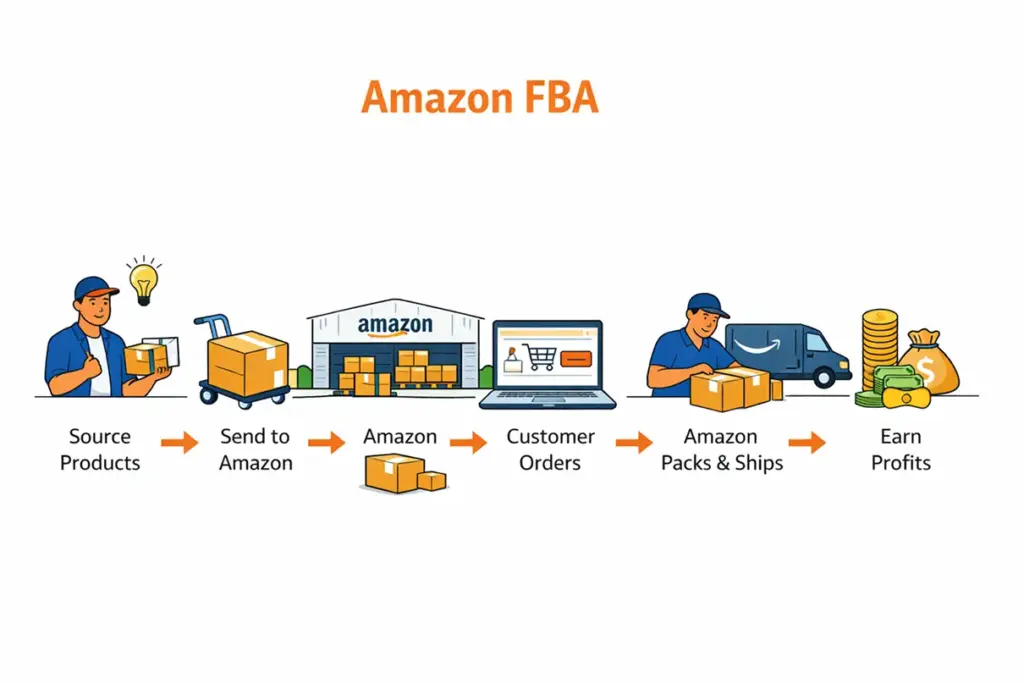
Here’s the basic flow of how the Amazon FBA program operates:
- Source or manufacture products, either by private labeling existing products or creating something new.
- Send your inventory to Amazon warehouses, where it’s stored until someone places an order.
- Amazon handles fulfillment completely, picking, packing, and shipping orders to customers on your behalf.
What Amazon handles for sellers
This is one of the biggest advantages of the Amazon FBA vs affiliate marketing:
- Shipping is taken care of, including Prime two-day delivery.
- Returns are processed by Amazon directly.
- Storage of your products in Amazon’s fulfillment centers.
- Customer service for order-related issues is handled by Amazon’s support team.
It’s like you just need to sell the products, and Amazon will do everything on your behalf.
Pros of Amazon FBA
- Higher earning potential because you control your product pricing and margins.
- Full control over your product, including branding, packaging, and positioning.
- Easier scaling with winning products since Amazon’s infrastructure grows with you.
Cons of Amazon FBA
- Inventory risk is real. If a product doesn’t sell, you’re stuck with stock and storage fees.
- Upfront investment can be steep, especially when you factor in how much it costs to sell on Amazon.
- Amazon fees, including referral fees, FBA fees, and storage costs, eat into your margins.
- Competition and copycats are a constant challenge, especially in popular categories.
Affiliate marketing vs Amazon FBA: Key Differences
Now, let’s get into the real differences between affiliate marketing vs Amazon FBA debate.
1. Startup cost
Affiliate marketing is a genuinely low-cost business model. A domain, hosting, and maybe an SEO tool are all you need to get going. You’re looking at $50 to $200 to launch.
Amazon FBA is a completely different story. Between sourcing inventory, product samples, shipping to warehouses, and early advertising, you need to spend at least $1,000 to $5,000 before seeing a return.
2. Risk level
Affiliate marketing carries very low financial risk. If something doesn’t work, you’ve lost time and maybe a small hosting fee. Nothing catastrophic.
Amazon FBA marketing carries real inventory and cash flow risks. If you order 500 units of a product and it flops, that’s potentially thousands of dollars tied up in unsellable stock.
3. Profit potential
Amazon FBA generally has higher profit potential because you control pricing and margins on physical products.
Affiliate marketing is easier to start, but tends to grow more slowly. Affiliate commission rates are lower, and scaling requires more content and more traffic.
4. Time investment
Affiliate marketing is mostly a content and SEO game. You’re writing blog posts, filming videos, and building an audience over time.
Fulfillment by Amazon is more operational. You’re sourcing products, negotiating with suppliers, managing inventory levels, and running Amazon ads. It’s a real business that demands real time.
5. Scalability
Affiliate marketing scales with traffic. More visitors equal more clicks equal more commissions. The ceiling is high if you can consistently grow your audience.
On the other hand, Amazon FBA scales with products and logistics. Add more winning products, expand to more markets, and your revenue grows. But each step requires more capital and more management.
6. Passive income potential
Affiliate content can generate income for years. A blog post you write today could earn commissions 18 months from now with zero additional effort.
Amazon FBA needs ongoing inventory management, which makes it less “passive” than affiliate marketing. You can automate some parts, but you’re always keeping an eye on stock levels and performance.
7. Control over business
Affiliates rely on merchants and affiliate programs. If Amazon Associates cuts commission rates (which they’ve done before), your income takes a hit overnight.
FBA sellers control their products and branding, which gives you more long-term business equity. But you’re still operating inside Amazon’s ecosystem and subject to their rules.
Get access to our exclusive offers and pro tips!
Affiliate marketing or FBA, which one is easier for beginners?
If you’re completely new to online business, affiliate marketing has lower entry barriers without question.
You don’t need capital to start. You don’t need to understand logistics or figure out how to start selling on Amazon. You just need a platform, a niche, and the patience to create content consistently.
Amazon FBA has a steeper learning curve. You need to understand product research, supplier relationships, Amazon’s algorithm, listing optimization, and paid advertising.
It’s manageable, but it’s not a weekend project.
That said, beginners who are willing to invest time in learning FBA often see faster initial revenue since Amazon already has the traffic. With affiliate marketing, you’re building that traffic from scratch.
Neither is “easy.” But affiliate marketing is more flexible for someone just starting.
Which one makes more money?
This is the question everyone wants answered, but it’s not a simple one.
Realistic earnings from affiliate marketing
Your income is directly tied to your traffic. Most beginner affiliates earn $0 to $500 in their first six months. As your content compounds and your audience grows, that can turn into $2,000 to $10,000+ per month.
But it takes time and consistency. Think of it like a flywheel. Slow to start, but powerful once it’s spinning.
Realistic earnings from Amazon FBA
Amazon FBA sellers can generate revenue much faster, but higher revenue doesn’t always mean higher profit.
Some FBA sellers do $50,000 in monthly revenue but walk away with $5,000 after fees and ad spend. Others find a winning product and build a six-figure business within a year.
The ceiling is genuinely high. But so is the floor for how many things can go wrong.
Profit vs revenue explained
This distinction is crucial and gets glossed over constantly. Revenue is the total sales you make. Profit is what you keep after expenses.
An affiliate marketer earning $3,000 a month with $200 in expenses keeps $2,800.
An FBA seller doing $30,000 a month might keep $3,000 to $5,000 after inventory costs, Amazon fees, shipping, and ads.
Always look at profit margins, not just revenue numbers
Affiliate marketing vs Amazon FBA: cost breakdown
Here is a cost breakdown for each model so that you can get a clearer picture.
Affiliate marketing costs
Getting started with affiliate marketing is genuinely affordable:
- Domain name: $10 to $15 per year
- Web hosting: $30 to $100 per year
- SEO tools: Ahrefs or Ubersuggest: $0 to $99 per month
- Content creation: Free if you write yourself, or $50 to $300 per article if outsourced
Total starting budget: $50 to $500
Amazon FBA costs
Understanding how much it does cost to sell on Amazon is something every new seller needs to research seriously before diving in:
- Inventory: $500 to $3,000+ for an initial order
- Shipping to Amazon warehouses: $100 to $500
- Amazon FBA fees: 15% to 40% of your sale price, depending on category
- Product samples: $50 to $200
- Amazon advertising (PPC): $200 to $1,000+ per month to get initial traction
Total starting budget: $1,500 to $5,000 minimum.
When is affiliate marketing the better choice
Affiliate marketing is the right call if you fall into any of these categories:
- Beginners who are new to online business and want to learn with minimal financial risk.
- Content creators who already have a blog, YouTube channel, or social media presence.
- Low-budget entrepreneurs who can’t afford to invest thousands upfront.
- People want low-risk online income with long-term passive potential.
If you love writing, creating videos, or building communities around topics you’re passionate about, Amazon affiliate marketing through the Associates program or other networks could be a natural fit.
When is Amazon FBA the better choice
Amazon FBA makes more sense if you fit this profile:
- People with startup capital who can absorb early losses while testing products.
- Product-focused entrepreneurs who get excited about sourcing, branding, and building physical product businesses.
- Those comfortable with logistics and scaling, or at least willing to learn the operational side of running a real e-commerce business.
If you’ve done your product research, you understand fulfillment by Amazon, and you’re ready to treat it like a real business from day one, the Amazon FBA program can deliver strong returns.
Affiliate marketing vs Amazon FBA: final verdict
Here’s the honest bottom line:
Affiliate marketing offers lower risk and slower revenue, but more sustainable growth. It’s the better path for beginners, content creators, and anyone who wants to build income without a large upfront investment. The only trade-off is that it takes time and patience before the money gets meaningful.
Amazon FBA offers higher earning potential and faster revenue, but it comes with real risk, real costs, and real operational demands. It rewards people who are willing to invest capital, learn quickly, and treat it like a proper business.
The best choice between the two comes down to four things:
- Budget: How much can you afford to invest right now?
- Skills: Are you a better content creator or a better operator?
- Risk tolerance: Can you handle the possibility of losing your initial investment?
- Long-term goals: Do you want a media business or a product business?
There’s no universally right answer. But there is a right answer for you, and now you have everything you need to figure out what that is.





Read Similar Blogs
We build lasting partnerships to boost and manage revenue growth


Leave a Reply