


Where To Promote Affiliate Links For Free (24 Platforms)
Every blog post tells you to “start affiliate marketing.” Almost none of them tell you where to go once you have an affiliate link in your hand.
I remember staring at my first affiliate link, thinking it was going to do something on its own. It didn’t. I spent weeks guessing, posting in the wrong places, getting ignored, and wondering if I was just bad at this. Turns out, I just didn’t have a proper map. So I built one.
This guide covers 24 free platforms and channels where you can promote affiliate links for free without spending a cent on ads.
I’ve tested and researched each one. I’ve broken down exactly what kind of audience it reaches, what content works on it, and what you should realistically expect.
Here’s the thing worth knowing before we start: affiliate marketing is now an $18.5 billion industry, and the majority of serious affiliates drive their traffic through free, organic channels. Which means if you’re searching for where to promote affiliate links for free, you’re not cutting corners. You’re doing what most experienced affiliates actually do.
So, let’s get into it.
Social media platforms to promote affiliate links for free
Social media is the most obvious starting point, but most people use it wrong. They post affiliate links like banner ads. But each platform has different rules, different audiences, and different tolerances for affiliate links.
Here’s what actually works on each one.
1. Pinterest
Pinterest is one of the most underrated platforms for affiliate marketing, and I say that with full confidence. It works more like a search engine than a social network. People come to Pinterest with intent. They’re looking for ideas, products, and solutions, which makes them much warmer leads than a random social media scroller.
You can pin directly to your affiliate links (or blog posts that contain them), and those pins can drive traffic for months or even years after you post them. Pinterest works best for visual niches: home decor, fitness, fashion, food, and anything with a strong aspirational angle.
Strategies to succeed on Pinterest:
- Create keyword-rich pin descriptions targeting long-tail searches
- Use vertical images (2:3 ratio) with clear, bold text overlays
- Pin consistently: 5 to 15 times a day using a scheduler like Tailwind
- Build boards around specific subtopics, not just one broad niche
- Link pins to SEO-optimized blog content that contains your affiliate links
Best for: Bloggers, lifestyle creators, product reviewers
Best niches: Home decor, fashion, travel, food, personal finance, beauty
Content format: Image, Idea Pins (short video)
Affiliate link rule: Direct links allowed in most cases (check program-specific rules)
Setup difficulty: Low
Effort level: Medium (requires consistent pinning)
Traffic type: Passive (SEO-driven)
Conversion scope: Medium to High (intent-based audience)
Expectations: Slow start, but pins compound over time. Expect real traction after 3 to 6 months
Pro tip: Seasonal content (holiday gift guides, back-to-school lists) can drive huge spikes. Create seasonal pins 6 to 8 weeks in advance.
2. Facebook
Facebook has over 3 billion active users. Yes, the organic reach has declined, but it’s far from dead, especially for you, affiliate marketers who lean into groups and community content rather than personal feeds.
Groups are where the real action happens. A well-run niche Facebook group can generate consistent referral traffic for years. The platform also lets you include links in posts, which is a major advantage over Instagram.
Strategies to succeed on Facebook:
- Join niche groups and provide value first before dropping links
- Create or moderate your own group around a specific topic that your affiliate products serve
- Use Facebook Stories for time-sensitive promotions
- Post native content (not just link dumps): reviews, tutorials, personal stories
- Run live sessions where you demonstrate or review affiliate products
Best for: Community builders, niche marketers, digital nomads
Best niches: Fitness, finance, parenting, tech, business tools, travel
Content format: Text, image, video, Stories, Reels
Affiliate link rule: Allowed in posts and comments, but raw links are often flagged. Use a landing page or link-in-bio instead
Setup difficulty: Low
Effort level: Medium
Traffic type: Active (post-driven)
Conversion scope: Medium
Expectations: Group building takes time. Expect meaningful results after 2 to 4 months of consistent engagement
Pro tip: Answer people’s questions in groups with a genuinely helpful post, then mention the affiliate product as a resource you personally use. This outperforms direct promotional posts every time.
3. Instagram
Instagram is visual-first, and that makes it naturally suited for lifestyle, fashion, beauty, fitness, and tech affiliate niches. The platform has evolved a lot. Reels now drive the majority of organic discovery, which means creators who make short-form video have a real advantage.
The biggest limitation: you can’t add clickable links directly in posts (unless you have Stories with link stickers, which requires a business account). So the link-in-bio becomes your main conversion point.
Strategies to succeed on Instagram:
- Use a link-in-bio tool like Linktree or Stan Store to house multiple affiliate links
- Create Reels that demonstrate product use rather than just promoting
- Use Stories with swipe-up links (available to all accounts now via link stickers)
- Build a content series around a specific problem your affiliate product solves
- Engage authentically in the comments of larger accounts in your niche
Best for: Visual creators, lifestyle influencers, product reviewers
Best niches: Fashion, beauty, fitness, travel, food, home
Content format: Image, Reels, Stories, carousel
Affiliate link rule: Bio only for feed posts; Stories link stickers for direct linking
Setup difficulty: Low
Effort level: High (requires regular content creation)
Traffic type: Active (post-driven)
Conversion scope: Medium (dependent on audience trust)
Expectations: Takes time to build an engaged following. Monetization becomes meaningful once you hit 1,000 to 5,000 engaged followers
Pro tip: Carousel posts consistently get saved and shared more than single images. Use them for “top 5 products” or “how to” content that keeps your affiliate links contextual, not forced.
4. LinkedIn
LinkedIn is one of the best platforms to promote affiliate links for free if your niche touches business, SaaS, productivity, finance, career development, or technology. The audience is professional and high-intent.
Clicks from LinkedIn often convert at above-average rates because the people clicking actually have purchasing power.
Long-form posts (not articles, but extended text posts) perform exceptionally well here. Personal stories and professional insights get shared far more than promotional content.
Strategies to succeed on LinkedIn:
- Write personal experience posts that naturally reference the tools you’re promoting
- Publish long-form LinkedIn articles for SEO visibility inside the platform
- Engage in comments on popular posts in your niche before posting your own
- Use the newsletter feature to build a subscriber base directly on LinkedIn
- Focus on outcomes and ROI language: LinkedIn users respond to results
Best for: B2B marketers, SaaS affiliates, career content creators
Best niches: Business tools, SaaS, finance, productivity, career development, online courses
Content format: Text posts, newsletters, articles, video
Affiliate link rule: Links allowed in posts; avoid excessive promotional language
Setup difficulty: Low
Effort level: Medium
Traffic type: Active (post-driven) with some passive reach from saved posts
Conversion scope: High (professional audience with purchasing intent)
Expectations: Slower follower growth than Instagram or TikTok, but higher-quality leads and above-average conversion rates
Pro tip: The first comment on your own post is prime real estate. Post your content, then immediately add a comment with your affiliate link and a clear reason why the product matters. This keeps the link out of the main post (which LinkedIn tends to suppress) while still making it visible.
Owned Platforms to Promote Affiliate Links for Free
Social media platforms can change their algorithms, ban your account, or disappear entirely. Owned platforms are where you build something that no one can take away from you. This is where serious affiliate marketers eventually land.
5. Your website or blog

A blog is the single best free platform for affiliate marketing over the long term. You own it. You control it. And when you rank on Google or other search engines for high-intent keywords, you’re getting targeted traffic that costs you nothing.
That’s the compounding effect of SEO-driven content, and it’s why nearly 65% of affiliate marketers use blogging as a primary traffic channel.
The key is to write content that matches search intent. Product reviews, comparisons, “best of” lists, and tutorials are the formats that consistently convert.
Some most successful affiliate marketing websites are: NerdWallet, Wirecutter, The Points Guy, Smart Passive Income.
Pro Tip:
If you’re using WordPress and promoting Amazon or other e-commerce affiliate products, an affiliate marketing plugin like AzonPress can streamline the entire process, letting you display comparison tables, product boxes, and affiliate links in a way that’s both clean and compliant. It handles link cloaking, geo-targeting, and product display without any coding.
Strategies to succeed with your blog:
- Target low-competition, high-intent keywords with affiliate search intent
- Write in-depth product comparisons and “best of” roundups
- Add comparison tables and product cards for visual scanners
- Build topical authority by covering a niche deeply before expanding
- Update older content regularly to maintain rankings
Best for: Writers, long-form content creators, SEO-focused marketers
Best niches: Tech, finance, health, SaaS, home, travel, outdoor gear
Content format: Text (with images, videos embedded)
Affiliate link rule: Full control. Direct links allowed
Setup difficulty: Medium (requires domain + hosting, basic setup)
Effort level: High upfront, then compounds over time
Traffic type: Passive (SEO)
Conversion scope: Very High
Expectations: SEO takes 6 to 12 months to show results. Once articles rank, traffic and commissions become largely passive
Pro tip: Write a “vs” post comparing two products in your niche. These have high buying intent and are less competitive than generic “best of” keywords.
6. Email and newsletters
Email is still the highest-converting channel in affiliate marketing. According to Litmus, email generates an average ROI of $36 for every $1 spent.
Once someone is on your email list, you have a direct line to them. No algorithm between you and your reader. No platform that can suppress your content. Just you and a person who chose to hear from you.
You don’t need a big list to start. Even 500 engaged subscribers can generate consistent affiliate commissions if you’re sending the right content.
To get started for free, two free platforms stand out:
- MailerLite offers a genuinely generous free plan (up to 1,000 subscribers) with automation features that most free tools lock away.
- Brevo (formerly Sendinblue) also has a strong free tier and is particularly good if you want SMS marketing alongside email.
Strategies to succeed with email:
- Send value-first content at least 80% of the time before making affiliate recommendations
- Segment your list based on interest so affiliate promotions feel relevant, not random
- Use plain-text emails for product recommendations — they feel personal and convert better
- Write subject lines that tease the benefit, not the product name
- Build a welcome sequence that introduces you and naturally mentions your go-to tools
Best for: Content creators with any existing audience, bloggers, course creators
Best niches: Finance, SaaS, health, productivity, e-commerce, online business
Content format: Text (HTML or plain text)
Affiliate link rule: Direct links allowed. Always disclose affiliate relationships
Setup difficulty: Low (MailerLite or Brevo free accounts set up in minutes)
Effort level: Medium
Traffic type: Active (send-driven)
Conversion scope: Very High
Expectations: List building takes time. But even a small, engaged list of 500 people can generate meaningful commissions consistently
Pro tip: Plain-text emails often outperform designed templates in open and click rates. They look personal, not promotional, and people respond to that.
Third-party content platforms to promote affiliate links for free
These platforms let you publish long-form content and tap into their existing traffic, which is a shortcut that most people overlook when searching for websites to promote affiliate links.
7. Medium
Medium has a domain authority that most bloggers spend years trying to achieve. Publishing there lets you rank for keywords your own site might not rank for yet.
You can include affiliate links in your articles (with proper disclosure), and the platform’s built-in recommendation algorithm can surface your content to relevant readers.
Note:
Medium’s Partner Program does not allow affiliate links in articles you submit for monetization. But you can use affiliate links in free articles.
Many affiliates use Medium to publish value-first content with links pointing to their own blog, where the full affiliate content lives.
Strategies to succeed on Medium:
- Submit articles to large relevant publications on Medium for amplified distribution
- Write listicles and how-to articles, formats that perform consistently on the platform
- Use Medium as a secondary publishing channel, not a replacement for your blog
- Include a clear FTC disclosure at the top of any article containing affiliate links
- Cross-link between your Medium articles and your main website
Best for: Writers, bloggers, thought leaders
Best niches: Technology, business, personal finance, productivity, mental health, marketing
Content format: Long-form text
Affiliate link rule: Allowed in non-monetized articles; direct linking is possible but use with discretion. Best practice is to link to your own content
Setup difficulty: Very Low
Effort level: Medium
Traffic type: Passive (algorithm-driven after initial publish)
Conversion scope: Medium
Expectations: Articles can gain traction immediately if they rank in Medium’s algorithm. Consistency compounds over time
Pro tip: Write a “personal story” style article (e.g., “How I saved $400 on my home office setup”) rather than a listicle. Story-driven content gets curated by Medium’s editors, which can drive thousands of extra views.
8. Substack
Substack is a newsletter platform with built-in discovery features, which makes it different from standard email. Readers can find your newsletter through the Substack app and search, meaning you can grow your list without paid acquisition.
Substack allows affiliate links, and the platform’s subscription model creates a highly engaged readership, exactly the kind of audience that converts on affiliate recommendations.
Strategies to succeed on Substack:
- Publish consistently: even weekly short-form is better than sporadic long-form
- Use the “Notes” feature (Substack’s version of Twitter) for short, discovery-focused posts
- Cross-promote with other Substack writers in adjacent niches
- Recommend affiliate products in context; not as sponsored placement, but as genuine tools
- Build a free tier with a paid upgrade option; your free subscribers are still your affiliate audience
Best for: Writers, niche experts, journalists, bloggers
Best niches: Finance, wellness, technology, culture, business, self-improvement
Content format: Long-form text (newsletter + blog hybrid)
Affiliate link rule: Direct links allowed in free posts
Setup difficulty: Very Low
Effort level: Medium
Traffic type: Active (send-driven) + Passive (SEO via public posts)
Conversion scope: Medium to High (highly engaged subscriber base)
Expectations: Growth is slow initially. The first 100 subscribers take the most effort. After that, word-of-mouth and recommendations accelerate things
Pro tip: Substack’s recommendation system lets other writers recommend your newsletter to their readers. Reach out to complementary writers and propose a mutual recommendation. It’s free and can add hundreds of subscribers quickly.
Community and forums to promote affiliate links for free
Forums and communities are some of the best places to post links to get clicks, but only when you do it right. The rule is simple: give value first. Always.
9. Reddit
Reddit has over 100,000 active communities covering virtually every niche imaginable. It’s also one of the most anti-promotional environments on the internet. Reddit users are sharp, skeptical, and quick to call out anyone who’s just there to drop links.
Reddit can drive massive traffic when done right, and can get you banned when done wrong. The key is to be a genuine community member first.
Strategies to succeed on Reddit:
- Build karma in relevant subreddits before posting anything promotional
- Answer questions thoroughly and mention affiliate products only when directly relevant
- Create educational posts that rank in Google searches using Reddit’s SEO authority
- Use the “search” function to find questions you can answer with your affiliate content
- Never use referral links directly in comments. Link to your blog post or review instead
Best for: Niche experts, community contributors
Best niches: Tech, gaming, personal finance, fitness, DIY, outdoor activities
Content format: Text posts, links, images
Affiliate link rule: Varies by subreddit. Most prohibit direct affiliate links. Link to your own content instead
Setup difficulty: Low
Effort level: High (community credibility takes time to build)
Traffic type: Active (post-driven)
Conversion scope: Medium (high volume but variable intent)
Expectations: Don’t expect quick affiliate wins. Reddit is a long game of building trust and reputation first
Pro tip: Answer a frequently asked question in your niche with a thorough, well-researched comment, then link to your full article or video at the end. This format gets upvoted and referenced repeatedly, generating ongoing traffic with a single piece of work
10. Quora
Quora is both a community platform and a content platform. Every answer you write has a permanent public URL, gets indexed by Google, and can rank in search results for years. That dual function makes it one of the more powerful free options on this list.
People on Quora are asking specific questions, which means they have intent. Your answer is the solution. If you structure it well and include an affiliate link where it genuinely helps, you have a high-converting piece of content that can drive passive traffic indefinitely.
Strategies to succeed on Quora:
- Answer questions where the natural resolution involves a product recommendation
- Write long, detailed answers; short answers rarely rank or gain significant upvotes
- Use Quora Spaces to build a content hub around your niche
- Link to your blog for readers who want more depth; this drives referral traffic
- Follow topics relevant to your affiliate niche to see new questions as they’re posted
Best for: Subject matter experts, writers, bloggers
Best niches: Finance, tech, health, travel, business, self-improvement
Content format: Long-form text answers
Affiliate link rule: Direct links allowed but must be disclosed and contextually relevant
Setup difficulty: Very Low
Effort level: Medium
Traffic type: Passive (SEO via Google + Quora’s internal algorithm)
Conversion scope: Medium to High (question-based intent)
Expectations: Individual answers can drive consistent traffic for years. Results compound as you build more high-quality answers
Pro tip: Find questions where existing answers are poor or outdated. Write a significantly better answer. Quora’s algorithm will surface it above older answers, and Google often ranks freshly updated Quora pages over stale ones
11. Niche Discord servers
Discord is where communities have migrated away from traditional forums. There are active Discord servers for virtually every niche, from software developers to sneaker collectors to travel hackers. Most of these communities have thousands of engaged members who trust each other’s recommendations.
Strategies to succeed on Discord:
- Join servers related to your niche and participate genuinely for weeks before mentioning products
- Create your own server as a community around a topic your affiliate products serve
- Use bot commands or pinned messages to share resources (including affiliate links)
- Host Q&A sessions or voice channels where you answer questions and naturally reference tools
- Partner with server moderators who can endorse your recommendations to their community
Best for: Community builders, tech reviewers, gamers, developers
Best niches: Gaming, software/SaaS, crypto, content creation, fitness, music production
Content format: Text, images, links, voice
Affiliate link rule: Varies by server. Always ask before posting links
Setup difficulty: Low
Effort level: High (trust-building takes time)
Traffic type: Active (community-driven)
Conversion scope: High when trust is established
Expectations: Discord is a relationship-first channel. Don’t expect quick conversions. Expect high-quality ones when they come
Pro tip: Start your own Discord server early, even if it’s small. A server of 200 people who trust you is worth more for affiliate conversions than 20,000 followers on Instagram who barely know you.
Video and audio platforms to promote affiliate links for free
Video and audio content builds trust faster than almost any other format. When someone watches or listens to you regularly, they start to feel like they know you. That trust directly translates into affiliate conversions.
12. TikTok
TikTok‘s organic reach is still extraordinary compared to most platforms. A brand-new account can hit millions of views with the right video. That makes it one of the most powerful free link promotion sites available right now, especially for product-focused niches.
TikTok has also introduced its own affiliate marketplace (TikTok Shop), but you can promote external affiliate links through your bio and by directing viewers to your other platforms.
Strategies to succeed on TikTok:
- Create short “product in action” videos that demonstrate real results
- Use the TikTok bio link to direct viewers to a landing page or Linktree
- Post niche-specific content consistently; the algorithm rewards depth in one topic
- Use trending sounds with evergreen educational content for extended reach
- Respond to comments with video replies; these often perform better than original posts
Best for: Visual creators, product reviewers, lifestyle creators
Best niches: Beauty, tech gadgets, fashion, fitness, food, home improvement
Content format: Short-form video (15 seconds to 3 minutes)
Affiliate link rule: Bio only for external links. TikTok Shop for in-platform affiliate products
Setup difficulty: Low
Effort level: High (video production + consistency required)
Traffic type: Active (algorithm-driven per post)
Conversion scope: Medium
Expectations: Viral potential is real, but inconsistent. Treat TikTok as a long-term audience builder. Conversions improve as trust builds
Pro tip: Create a “favorites” or “what I use” series. These playlist-style series get saved and revisited, which keeps your affiliate links active long after the initial post.
13. YouTube
YouTube is the best platform to promote affiliate links for free if you’re willing to invest in video content. YouTube videos rank on Google. A well-optimized review video can drive search traffic from both YouTube and Google simultaneously. That’s a compounding effect that no other social platform offers.
Your affiliate links go in the video description. You can also pin a comment with your links. Both get clicked. Viewers who watch through to the end of a review video are highly motivated buyers.
Strategies to succeed on YouTube:
- Put affiliate links in the first 3 lines of your video description (visible without expanding)
- Create tutorials, comparisons, and “best of” videos; the three highest-converting formats
- Pin affiliate link comments to the top of your comment section
- Mention links verbally in the video (“link in the description below”)
- Add timestamp chapters so viewers find the relevant sections fast
Best for: Video creators, tech reviewers, educators, how-to creators
Best niches: Tech, fitness equipment, home appliances, software, outdoor gear, finance tools
Content format: Long-form video (8 to 20 minutes tends to perform well for reviews)
Affiliate link rule: Direct links in description and comments
Setup difficulty: Medium (camera + editing required)
Effort level: High
Traffic type: Passive (SEO-driven via YouTube and Google search)
Conversion scope: Very High
Expectations: Channel growth is slow initially. But each video you publish compounds over time. A single evergreen review can drive commissions for years
Pro tip: Create a “Resources I Use” pinned post on your community tab listing your top affiliate products with links. It’s a passive affiliate asset that visitors see without watching a single video.
14. Podcasts
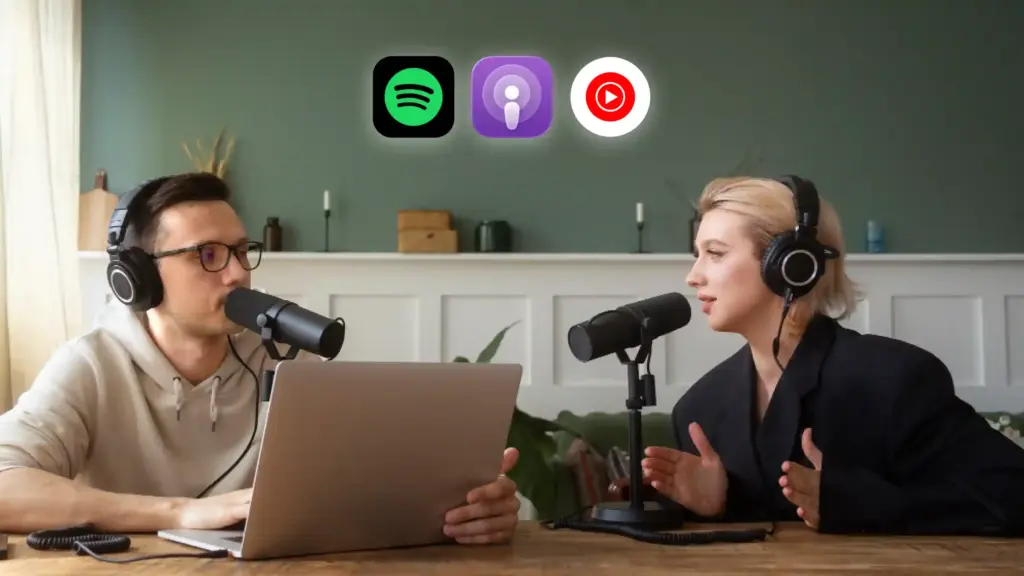
Podcasts are an underused channel for affiliate marketing, especially compared to how large the medium has become. There are over 4 million podcasts globally, but relatively few that are actively monetized through affiliate marketing. That’s an opportunity.
The major podcast platforms include Apple Podcasts, Spotify, and YouTube Music (which now hosts full-length podcast episodes with video). Each allows you to include affiliate links in your episode show notes, which accompany every episode on those platforms.
The key advantage of podcasting: listener trust is extremely high. Podcast audiences are loyal and treat hosts like trusted friends. When you recommend a product in your own voice, it converts differently than any other format.
Strategies to succeed with podcasting:
- Mention affiliate products as genuine recommendations within episode content
- Create a “resources” page on your website with all podcast affiliate links
- Use episode show notes to house affiliate links for listeners who want more info
- Build a consistent publishing cadence: weekly works best for algorithm visibility
- Partner with other podcasters for cross-promotional episodes
Best for: Hosts with an existing audience, niche experts, interviewers
Best niches: Business, personal finance, health, technology, self-improvement, travel
Content format: Audio (+ video for YouTube Music / Spotify video podcasts)
Affiliate link rule: Links in show notes. Direct mentions in audio.
Setup difficulty: Medium (requires microphone and recording setup)
Effort level: Medium to High
Traffic type: Active (new episode driven) + some passive via back catalog
Conversion scope: High (strong listener trust)
Expectations: Building a podcast audience takes time. But affiliate earnings per listener tend to be higher than most other platforms because the trust level is also higher
Pro tip: Promote your affiliate links during the “listener favorites” or “what I’ve been using” segment of your episodes. Naming it as a recurring segment trains listeners to pay attention specifically at that point.
Get access to our exclusive offers and pro tips!
More Ways to Promote Affiliate Links for Free
Some of these channels are often overlooked because they require you to already have some kind of audience or product. But if you do, they can be among the highest-converting free options available.
15. Your online courses
If you teach an online course on any platform (Teachable, Udemy, Kajabi, Gumroad, etc.), your students are among the warmest audiences you have. They already trust you enough to pay for your instruction. Recommending affiliate products as part of your course curriculum is a natural extension of that trust.
Strategies to succeed:
- Recommend affiliate products as “tools I use and require for this course.” Students who see a product as necessary for their progress will click and convert at high rates.
- Include resource pages inside your course that list recommended tools with affiliate links.
- Mention products in video lessons where they genuinely apply. Contextual mentions in educational content feel helpful, not promotional.
- Update your course resource sections when better products come along. Students revisit these sections long after completing a course.
- Use affiliate links in the PDFs and workbooks that accompany your course modules.
Best for: Educators, coaches, skill-based content creators
Best niches: Marketing, design, programming, fitness, language learning, business
Content format: Video, PDF, text
Affiliate link rule: Direct links in course materials
Setup difficulty: High (requires an existing course)
Effort level: Low once course is built
Traffic type: Passive (embedded in course content)
Conversion scope: Very High
Expectations: High conversion rates because students already trust your recommendations deeply
Pro tip: Add a “Recommended Tools” module at the start of your course. Students who are just beginning are actively looking for what to buy and use. Catch them at that moment.
16. Your free webinars
Webinars give you an audience that has already opted in and shown up. That level of intent is rare. Mentioning an affiliate product during a live webinar, with a demo if possible, can drive significant conversions in a single session.
Strategies to succeed:
- Structure your webinar to teach first. Provide genuine value through the content, then introduce your affiliate recommendation as the tool that makes the taught strategy work.
- Share your screen and demonstrate the affiliate product live during the webinar. Live demos convert dramatically better than static slides.
- Drop affiliate links in the chat during relevant sections. Engaged viewers will click in real time.
- Send a follow-up email to all attendees with the replay link and your recommended resources (with affiliate links). This is often where the bulk of conversions happen.
- Host repeat webinars on the same topic. Evergreen webinar content can be delivered live multiple times to different audience batches.
Best for: Coaches, educators, consultants
Best niches: SaaS, business tools, marketing, finance, health programs, productivity
Content format: Live video + slides
Affiliate link rule: Direct links in chat and follow-up emails
Setup difficulty: Medium (requires webinar software: Zoom, Demio, StreamYard)
Effort level: High per session; lower if repurposed
Traffic type: Active (registration-driven)
Conversion scope: Very High
Expectations: Requires an existing audience to fill the webinar. High conversion rate per attendee when done well
Pro tip: Offer a bonus (a checklist, template, or PDF) that’s only available to people who click your affiliate link during the webinar. It’s an ethical incentive that boosts conversion rates significantly.
17. Your personal community or forums
If you’ve built any kind of community, whether it’s a paid membership site, a private Facebook group, a Discord server, or a forum you own, you have a built-in affiliate promotion channel that you fully control.
Strategies to succeed:
- Share product reviews and tutorials inside your community as part of your regular content calendar. Members expect value from you, and product recommendations fit naturally within that.
- Create a “community favorites” pinned thread or channel where you list your top affiliate products with links and short explanations.
- Ask members what they’re struggling with, then recommend affiliate products that solve those specific problems. Personalized recommendations convert much better than generic ones.
- Run community-exclusive deals or bonuses if your affiliate program allows it. Members appreciate feeling like insiders.
- Be transparent. Your community trusts you. Disclose that you earn a commission. That transparency often increases conversions rather than reducing them.
Best for: Community builders, coaches, membership site owners
Best niches: Any. Trust level makes almost any niche work.
Content format: Text, video, links
Affiliate link rule: Full control
Setup difficulty: High (requires an existing community)
Effort level: Low (once community exists)
Traffic type: Active (community-driven)
Conversion scope: Very High
Expectations: Requires a pre-existing audience. But conversion rates in owned communities are typically the highest of any channel
Pro tip: Don’t promote constantly. The moment a community feels like a sales channel, engagement drops. Keep affiliate promotions to 20% or less of your total content output.
18. Your Link-in-Bio Tools
Link-in-bio tools are not just for Instagram. They’re essentially mini landing pages that aggregate your affiliate links in one place and can be shared anywhere: your email signature, your social profiles, your YouTube description, your business card.
Popular free options include Linktree, Linkin, Beacons, and Carrd. Each lets you organize your affiliate links by category and track clicks.
Strategies to succeed:
- Organize your link-in-bio page by product category (e.g., “Camera Gear,” “Software I Use,” “Books”) rather than dumping all links together.
- Use short, descriptive button labels. “My Favorite Email Tool” outperforms “Click Here.”
- Add your link-in-bio URL to every bio, signature, and profile you own. It’s a passive conversion point that works across all your channels simultaneously.
- Update it regularly. Remove links to products you no longer use or recommend. Your credibility depends on the relevance and quality of your recommendations.
- Track which links get the most clicks and create more content around those product categories.
Best for: All affiliate marketers regardless of niche
Best niches: Universal
Content format: Link aggregator (web page)
Affiliate link rule: Direct links
Setup difficulty: Very Low
Effort level: Very Low
Traffic type: Passive (traffic from other platforms directed here)
Conversion scope: Medium
Expectations: Functions as a passive hub. Effectiveness depends entirely on how much traffic you send to it from your other channels
Pro tip: Use a custom domain for your link-in-bio page if possible (e.g., links.yourname.com). It looks more professional and trustworthy than a generic Linktree URL.
Free Websites to Promote Affiliate Links for Free
Beyond the major platforms, there are several smaller, niche-specific sites where you can promote affiliate links for free. These won’t drive the volume of a YouTube channel or blog, but they’re legitimate supplementary sources of traffic and often have less competition.
19. Answers.com
Answers.com is a Q&A platform similar to Quora where users ask and answer questions across a wide range of topics. It has lower traffic than Quora but also significantly less competition for answers. You can include affiliate links in answers where they’re genuinely helpful.
Best for: Supplementary traffic building
Best niches: Health, tech, lifestyle, education
Content format: Text answers
Affiliate link rule: Allowed where contextually relevant
Setup difficulty: Very Low
Effort level: Very Low
Traffic type: Passive
20. SlideShare.net
SlideShare (now part of Scribd) lets you upload presentation slides and documents. Well-designed slide decks on topics like “10 Best Tools for Remote Workers” can include affiliate links and get discovered by professionals searching for business and educational content.
Best for: B2B marketers, educators, consultants
Best niches: Business, marketing, tech, education, finance
Content format: Slides, PDFs
Affiliate link rule: Links in slides allowed
Setup difficulty: Low
Effort level: Medium
Traffic type: Passive (SEO)
21. Steemit.com
Steemit is a blockchain-based blogging platform where writers earn cryptocurrency for their content. It has a niche but engaged community. You can publish long-form content and include affiliate links in posts, similar to how you would on Medium.
Best for: Crypto enthusiasts, tech bloggers
Best niches: Crypto, blockchain, tech, investing, decentralized tools
Content format: Long-form text
Affiliate link rule: Direct links allowed
Setup difficulty: Low
Effort level: Medium
Traffic type: Active (community-driven)
22. Imgur.com
Imgur is an image-sharing platform with a large, primarily Reddit-adjacent community. It works best for visual niches where you can share product images, infographics, or comparison charts. Link traffic from Imgur to your blog or landing page rather than directly to affiliate programs.
Best for: Visual content creators
Best niches: Gaming, tech, humor, fitness, food, gadgets
Content format: Images, GIFs
Affiliate link rule: Links in descriptions; best to link to your own content first
Setup difficulty: Very Low
Effort level: Low
Traffic type: Active (viral/community-driven)
23. FindAForum.net
FindAForum is a directory of online forums organized by topic. It’s a useful resource for finding niche forums in your affiliate area where you can participate and, over time, include links to your content and affiliate resources. Think of it as a search engine for forum communities.
Best for: Niche community marketers
Best niches: Any (it’s a directory covering hundreds of niches)
Content format: Forum threads and posts
Affiliate link rule: Varies by individual forum
Setup difficulty: Very Low
Effort level: High (community trust required)
Traffic type: Active
24. MeWe.com
MeWe is a privacy-focused social network that positions itself as a Facebook alternative. It has a smaller but engaged user base and less algorithmic suppression of content. MeWe groups function similarly to Facebook groups and can be a useful supplementary channel for niche communities.
Best for: Privacy-conscious communities, alternative social media audiences
Best niches: Politics, health, tech, fitness, spirituality, alternative lifestyle
Content format: Text, images, video
Affiliate link rule: Direct links allowed
Setup difficulty: Very Low
Effort level: Medium
Traffic type: Active (community-driven)
Does free affiliate link promotion actually work?
Yes, but only if you treat it seriously.
Free promotion is not zero-effort promotion. It’s zero-cost. Often, the cost you save, you’ll have to compensate for with the effort you put in.
The trade you make is time instead of money. And the compounding nature of free organic traffic, especially from SEO, makes that trade worth it. The data support this.
Around 78% of affiliate marketers use SEO as their primary traffic source. Also, according to AuthorityHacker, affiliates who use email marketing earn 67% more than those who don’t. And blogging is used by 65% of affiliates as their primary content channel. None of those channels require paid ads.
The marketers who fail at free promotion usually fail for one of two reasons.
- Either they spread themselves across too many channels at once and don’t build depth anywhere.
- Or they give up after three months, right before the compounding effects kick in.
Pick two or three channels, go deep, and stay consistent. That’s the entire strategy for where to promote affiliate links for free without burning yourself out.
What to know before you start promoting?
Before you go scatter your affiliate links across the internet, there are a few things worth knowing:
- Disclosure is not optional.
In most countries, including the US (FTC guidelines) and the UK (ASA rules), you are legally required to disclose when you earn a commission from a link. It’s not just a legal requirement. Audiences actually respond better to disclosed recommendations than to ones that feel hidden. - Not every niche performs equally everywhere.
A finance affiliate will get better conversions from LinkedIn and email than from TikTok. A beauty affiliate will do better on Instagram and Pinterest than on Reddit. Match your channel to your audience’s natural behavior. - Check your affiliate program’s rules.
Some programs (notably Amazon Associates) have specific restrictions on where you can post links. For example, Amazon does not allow links in PDFs, eBooks, or email campaigns in some regions. Read the terms before you promote. - Track your links.
Use UTM parameters or a link-cloaking tool to track which platforms are actually sending you clicks and conversions. Without tracking, you’re guessing.
Common mistakes that get affiliate links banned
These mistakes happen more than they should. And it costs real money. Here’s what to avoid.
- Posting raw affiliate links without context: On Reddit, Facebook groups, and Discord, a raw affiliate link with no context is almost always removed. Always frame your link within helpful content.
- Keyword stuffing your bio or profile: Platforms detect and suppress profiles that read like spam. Write like a human.
- Cloaking links to bypass platform detection: Some affiliates try to disguise affiliate links to sneak them past platforms that disallow them. This violates most terms of service and can get your account permanently banned.
- Using affiliate links in places the affiliate program explicitly prohibits: If Amazon says no email links in your region, don’t put Amazon links in your emails. The risk of getting your account terminated is not worth it.
- Not disclosing affiliate links: A lack of disclosure can result in your content being removed, your account flagged, or in serious cases, a formal warning from regulatory bodies.
Which channel should you start with?
There’s no single right answer, but there are strong patterns based on what kind of creator you are.
If you are a writer…
Start with a blog, plus Quora, plus Medium. All three are text-based, interconnected (you can repurpose content across all three), and have real passive traffic potential through Google. Build your email list from day one alongside these.
If you’re a visual creator…
Start with Pinterest, plus Instagram, plus TikTok. Pinterest gives you long-term passive traffic. Instagram builds your brand. TikTok gives you organic reach that the others can’t match right now.
If you already have an audience…
Your email list first. Always. Email converts better than any social platform, and an existing audience is your fastest path to meaningful affiliate income. Then expand to wherever your audience already follows you.
If you’re a complete beginner with no audience…
Start with YouTube and a blog simultaneously. YouTube videos rank on Google. Your blog posts rank on Google. Both compounds over time. Both feed each other with cross-promotion opportunities. It’s the hardest starting point in terms of effort, but it’s the most durable long-term strategy.
Whatever you choose, pick it and commit to it for at least six months before you evaluate.
The question of where to promote affiliate links for free has 24 legitimate answers in this guide, but the real answer is simpler: the best platform is the one you’ll actually show up on consistently.
Most channels take time to show results, and the ones who quit early never see the compounding effect that makes free promotion genuinely powerful.
To wrap things up
You now have 24 real, tested places to promote affiliate links for free. No paid ads. No shortcuts. Just channels that work when you use them with intention.
The biggest mistake I see affiliate marketers make is treating free promotion as a temporary phase before they “get serious” with paid traffic. That’s backwards.
Free channels like SEO, email, YouTube, and community platforms are where the most durable affiliate income gets built. Because the traffic compounds. A blog post that ranks today keeps earning commissions two years from now. An email list you build today is yours forever, regardless of what any platform’s algorithm does next month.
Start with one or two channels that match how you naturally create content. Go deep before you go wide. Track what works. Double down on it.
The answer to where to promote affiliate links for free is not one platform. It’s a system you build over time, one piece of content at a time.
And remember,
Warren Buffett said:
“Someone’s sitting in the shade today because someone planted a tree a long time ago.“


Frequently asked questions
Here are some frequently asked questions and their answers regarding platforms to promote your affiliate links:
Can I promote affiliate links on social media for free?
Yes. Platforms like Pinterest, Instagram, TikTok, LinkedIn, and Facebook all allow affiliate link promotion in some form, either directly in posts or through your bio link. Rules vary by platform, so always check each one before posting. Pinterest and LinkedIn tend to offer the best organic reach for affiliate content without paid promotion.
What is the best free platform to promote affiliate links as a complete beginner?
A blog combined with YouTube is the strongest long-term starting point. Both platforms let your content rank on Google, which means a single piece of content can drive passive traffic and affiliate clicks for years. If writing or video feels too intimidating, start with Quora or Medium to build confidence while reaching a real audience immediately.
Do I need a website to promote affiliate links for free?
No. You can promote affiliate links through free platforms like Medium, Substack, Quora, Pinterest, YouTube, and email newsletters without owning a website. That said, having your own blog gives you full control, better SEO potential, and a long-term asset that no platform can take away from you. It is worth building one eventually.
Is it against the rules to put affiliate links in emails?
Not in general, but rules vary by affiliate program. Amazon Associates, for example, restricts affiliate links in email campaigns in certain regions. Always read your program’s terms of service before adding links to email. Platforms like MailerLite and Brevo allow affiliate links in emails, but they do require proper disclosure to subscribers.
How long does free affiliate promotion take to generate income?
It depends on the channel. Email and community-based promotion can generate commissions within days if you already have an audience. SEO-driven channels like blogs and YouTube typically take 6 to 12 months to build meaningful traffic. The tradeoff is that SEO traffic compounds passively over time, while social and community traffic requires ongoing effort to maintain.
Manage links, create product tables, and comparison tables, and increase your affiliate revenue



Read Similar Blogs
We build lasting partnerships to boost and manage revenue growth



Leave a Reply