

Successful Amazon Affiliate Websites Examples: You Can Learn From
Key takeaways:
Building a successful Amazon affiliate website isn’t about luck; it’s about strategy. This guide breaks down what actually works by analyzing real examples and showing how you can apply the same approach.
Here’s what you’ll get from this blog:
– A clear understanding of what makes an Amazon affiliate website successful
– Real examples of high-performing affiliate sites across different niches
– Proven strategies these sites use to drive traffic and conversions
– Practical insights you can apply to your own affiliate content
– A look at how AzonPress helps display products more effectively
If you’re planning to start or grow an affiliate site, this guide gives you both inspiration and a clear direction.
Amazon affiliate marketing looks simple on paper. You sign up for the Associates program, add a few affiliate links, and wait for the commissions to roll in. But if you’ve ever tried building a site and wondered why your traffic isn’t converting, or why you’re not getting traffic at all, you already know it’s not that simple.
In most cases, the problem comes down to one thing: not understanding what successful affiliate marketing websites actually do differently.
One of the best ways to learn affiliate marketing isn’t by reading theory. It’s by looking at real websites that are already generating traffic and commissions, then studying how they structure their content, recommend products, and guide readers toward a purchase.
That’s exactly what this article is about. We’ll walk through some of the best Amazon affiliate website examples, break down what makes each one effective, and highlight the strategies you can apply to your own site.
Whether you’re starting from scratch or trying to improve an existing affiliate website, these examples will give you a clearer idea of what a successful Amazon affiliate website actually looks like.
What makes an Amazon affiliate website successful?
Before we dive into the examples, it’s helpful to understand what separates a mediocre affiliate site from one that consistently earns commissions.
Successful Amazon affiliate sites aren’t built on luck. And it’s not just about publishing a large number of articles either. The websites that perform well usually share a few common characteristics.
1. A clear, focused niche
The affiliate sites that succeed rarely try to cover everything. Instead, they focus on a specific niche and go deep.
For example, a website dedicated entirely to espresso machines will usually perform better than a broad “kitchen products” site. A focused niche helps the site build topical authority and attract a more targeted audience.
When visitors land on a niche-focused website, they immediately feel like they’re in the right place. That sense of relevance builds trust, and trust plays a big role in whether someone clicks on an affiliate product link.
2. Content built around buying decisions
Successful affiliate sites understand search intent. Their content isn’t written just to inform; it’s designed for people who are actively researching a purchase.
You’ll often see content targeting queries like:
- “Best [product] under $100”
- “[Product A] vs [Product B]”
- “[Product] review — is it worth it?”
These are the types of searches that lead directly to affiliate conversions. Informational content can help build authority and bring in additional traffic, but the real revenue usually comes from content that reaches readers right when they’re close to making a buying decision.
3. SEO-driven traffic
Most successful Amazon affiliate sites rely heavily on organic search traffic.
Paid traffic can be difficult to sustain because Amazon’s commission rates are relatively low. Social media traffic, on the other hand, is often unpredictable and hard to scale.
SEO is what makes the affiliate model work long-term. That’s why these sites focus on keyword research, search intent, on-page optimization, and building topical authority over time.
4. Honest, detailed product reviews
Short, surface-level reviews rarely convert. The best affiliate sites treat their reviews more like complete buying guides. Instead of simply describing a product, they explain:
- key features and specifications
- real-world use cases
- pros and cons
- who the product is best suited for
Readers can quickly tell the difference between a thoughtful review and one that simply repeats information from the product listing. Detailed, honest reviews build trust, and trust is what drives affiliate clicks.
5. Smart affiliate link placement
Where and how affiliate links appear in the content also matter. Links placed naturally inside helpful content tend to perform much better than banners or links pushed to the bottom of the page. Many high-performing affiliate sites also use:
- comparison tables
- product boxes
- clear call-to-action buttons
These elements make it easier for readers to compare products and take action when they’re ready to buy.
6. Trust building
Trust plays a huge role in affiliate conversions. Successful affiliate sites make an effort to show transparency and credibility through things like:
- a clear affiliate disclosure
- an About page explaining who runs the site
- consistent publishing and well-structured content
When readers feel confident about the site and the information it provides, they’re far more likely to click an affiliate link and complete a purchase.
Get access to our exclusive offers and pro tips!
Successful Amazon affiliate websites examples
Here’s a look at several successful Amazon affiliate websites across different niches. For each one, we’ll cover what they do, why it works, and what you can take away.
1. The Wirecutter (Now NYT Wirecutter)
Niche: General consumer products (electronics, home, kitchen, and more)
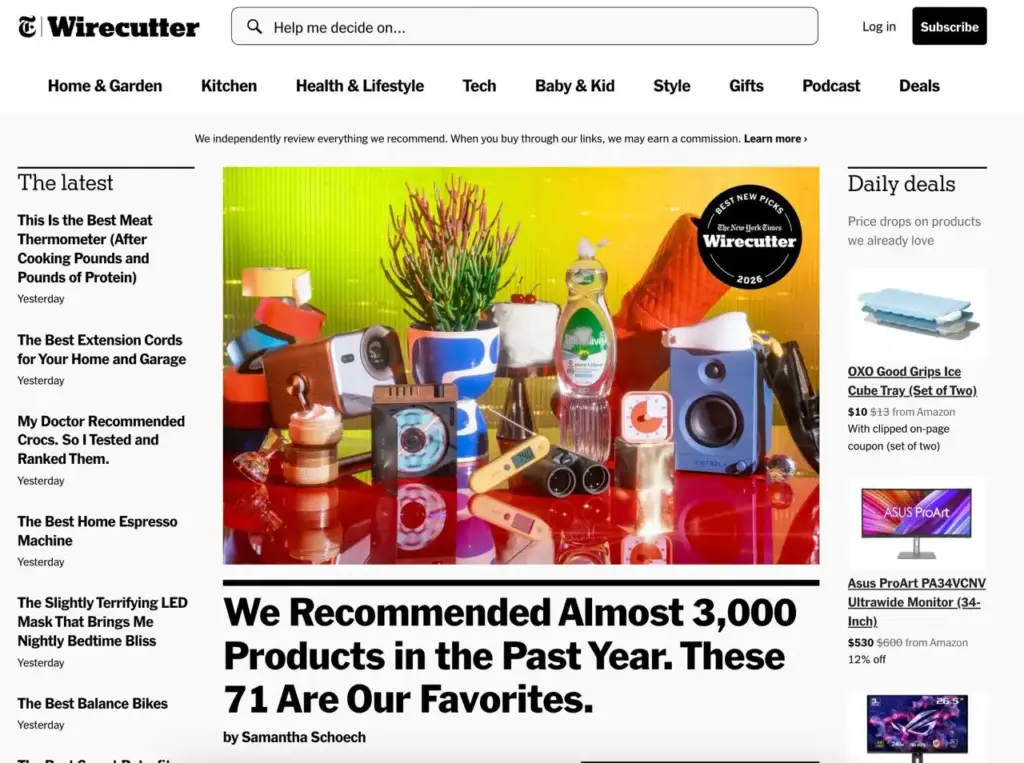
Content they focus on: In-depth “best of” buying guides backed by hands-on testing. Their content follows an editorial approach rather than being purely SEO-driven. Each recommendation is supported by real research, expert opinions, and extensive product testing.
Why their strategy works: Wirecutter built its reputation by doing something different. Instead of presenting a long list of 20–30 products, they often recommend one main product as the best choice.
This clear and confident recommendation helps readers who feel overwhelmed by too many options. When someone searches for the “best” product, they usually want a decision, not another long comparison.
Another key factor is transparency in their testing process. Wirecutter often explains how products were tested, what criteria were used, and why certain options were rejected. This level of detail builds strong trust with readers.
They also update their guides regularly. Keeping content fresh helps maintain search rankings and ensures recommendations stay relevant as products evolve.
Key takeaway: In high-ticket niches, thorough research and experience-based content build trust and drive higher-value purchases. Hands-on testing within your niche can be a powerful differentiator.
2. OutdoorGearLab
Niche: Outdoor gear (hiking, camping, climbing, skiing, and more)
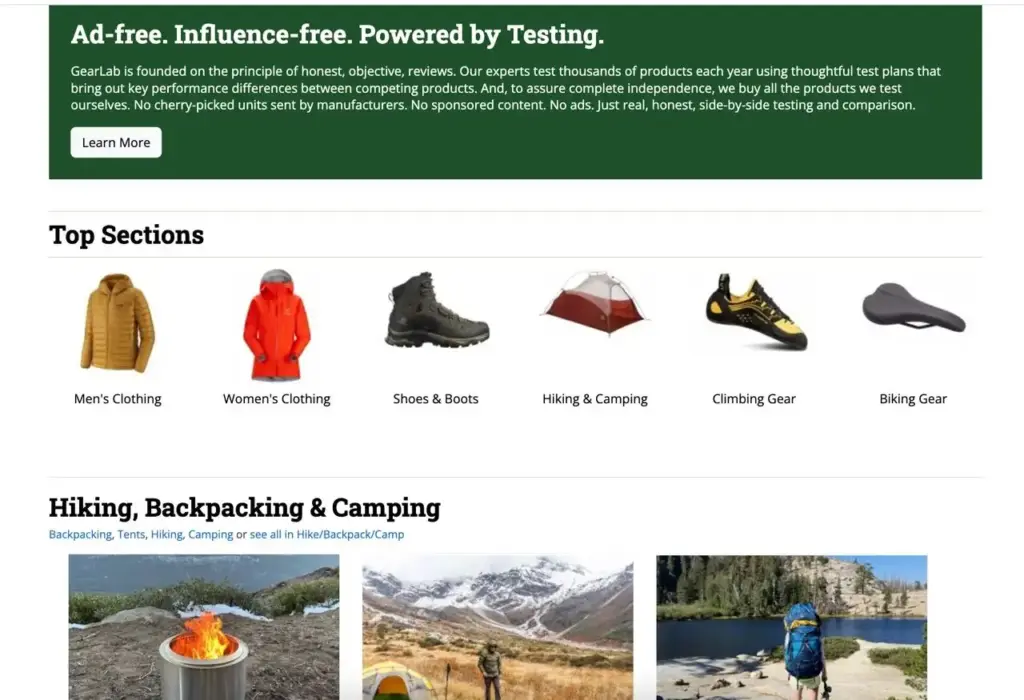
Content they focus on: Comparative product tests and detailed buying guides for outdoor equipment. Their team physically tests products in real environments, backpacks on actual trails, tents in real weather conditions, and gear used during outdoor adventures.
Why their strategy works: OutdoorGearLab focuses on a high-value niche where buyers are willing to spend serious money. Outdoor gear purchases are rarely impulse decisions. When someone plans to spend hundreds of dollars on equipment like a sleeping bag or hiking backpack, they research carefully before buying.
This makes the audience extremely valuable for affiliate marketing.
Their field-testing approach also gives them content that’s difficult for competitors to replicate. Instead of relying on manufacturer descriptions, their reviews include real-world performance data, durability insights, and practical testing results.
Another strength is their clear rating system across different categories. Readers can quickly compare products based on performance, comfort, durability, and value, which helps them make faster decisions.
Key takeaway: In niches where products are more expensive, buyers tend to research more before purchasing. Creating high-quality, experience-based content builds trust and encourages higher-value purchases. If you can test or use the products in your niche, it becomes a powerful advantage.
3. Dog Food Advisor
Niche: Pet food (specifically dog food)
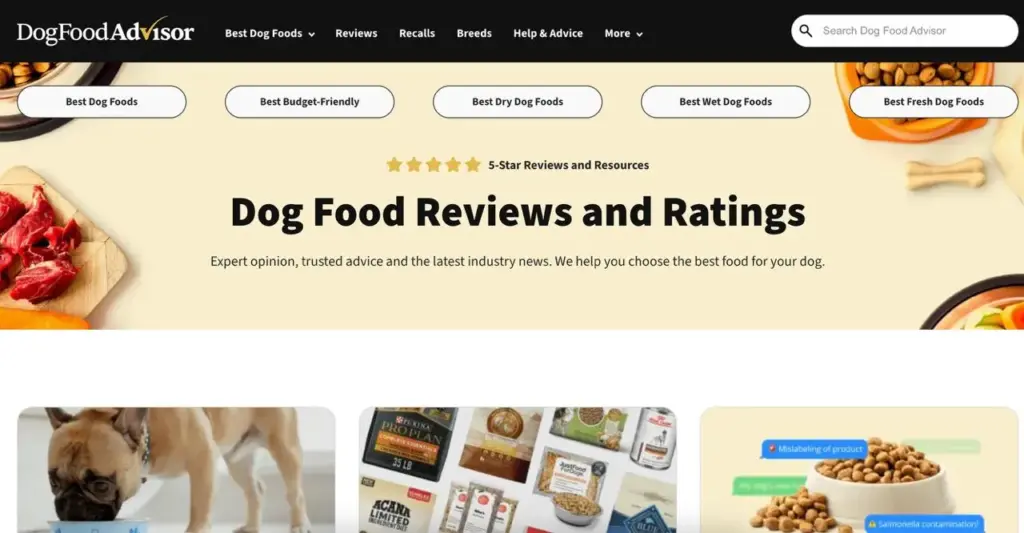
Content they focus on: Detailed dog food reviews, recall alerts, and buying guides. Their content focuses heavily on nutritional analysis and ingredient breakdowns, helping pet owners understand what they’re feeding their dogs.
Why their strategy works: Dog Food Advisor focuses on a passionate audience. Pet owners are protective and willing to invest in their animals’ health, especially when it comes to food.
Instead of going broad, they chose to go extremely specific, not all pet products, not even all pet food, but just dog food. This narrow focus helped them build strong authority and trust in a single niche.
One of their smartest strategies is the recall database. It’s not just content, it’s a resource that dog owners actively search for and revisit. This brings consistent traffic without relying only on buyer-intent keywords.
Their nutritional analysis is another strong differentiator. They break down complex ingredient lists into simple insights that average pet owners wouldn’t be able to interpret on their own. This creates real value and builds credibility.
Key takeaway: Going narrower than feels comfortable often leads to better results. A hyper-specific niche helps you build stronger authority and a more loyal audience. Also, think beyond product reviews; they create useful, recurring resources that can bring long-term traffic and trust.
4. PCPartPicker
Niche: DIY PC building (computer components and custom PC setups)
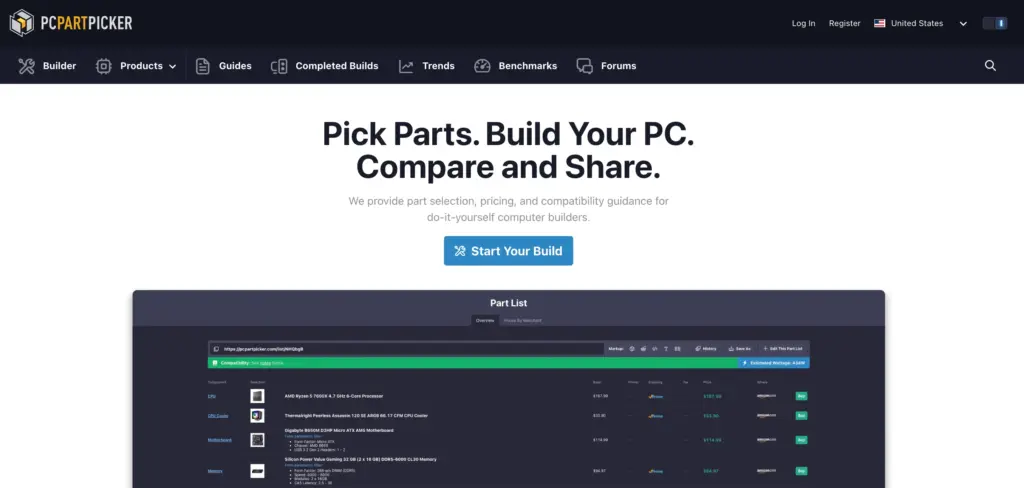
Content they focus on: PCPartPicker combines product listings with powerful tools and community-driven content. Instead of traditional reviews, it offers a PC Builder tool, curated build guides, price comparisons, and user-submitted PC builds.
Why their strategy works: PCPartPicker targets a specific and growing niche, people who want to build their own PCs. This audience is highly research-driven, detail-oriented, and often ready to spend significant amounts on components.
Their biggest strength is the PC Builder tool. It doesn’t just list parts; it actively checks compatibility between components. This helps users avoid costly mistakes, like buying parts that don’t work together, which is a major concern in PC building.
The tool goes deeper by identifying potential issues like power supply requirements and performance bottlenecks. This makes the entire process easier and more approachable, especially for beginners.
Another key factor is their affiliate-driven model. Once users finalize their build, PCPartPicker directs them to trusted retailers to purchase the components. This creates a smooth buying journey while generating affiliate commissions.
What truly sets them apart is their community-driven ecosystem. Users can share builds, explore others’ setups, and get inspiration or advice. This keeps people coming back, not just to buy, but to learn and engage.
Key takeaway: Tools can be more powerful than content alone. If you can build something that solves a real problem (like compatibility checking), you create long-term value. Combine that with community and smart affiliate integration, and you have a highly sustainable affiliate model.
5. This Is Why I’m Broke
Niche: Novelty products, quirky gadgets, and gift ideas.
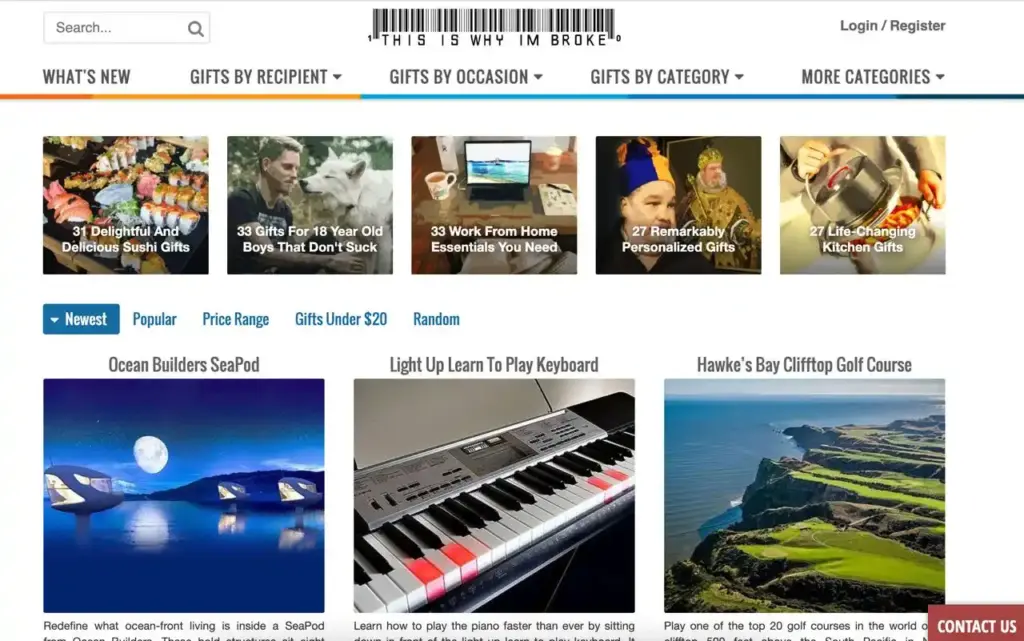
Content they focus on: Curated lists of unusual, fun, and sometimes bizarre products. Instead of traditional reviews or comparisons, the site focuses on short, engaging descriptions that highlight why each product is interesting, funny, or unexpected.
Why their strategy works: This Is Why I’m Broke takes a completely different approach compared to most affiliate sites. Instead of focusing on high-ticket items or serious buying decisions, it leans into entertainment and curiosity.
Their biggest strength is their focus on novelty products. These are items people don’t necessarily search for but love discovering. From quirky gadgets to hilarious gifts, the content is designed to surprise and entertain.
Another key factor is their shareability. The products are naturally engaging, which makes people want to share them on social media or with friends. This drives a large amount of traffic without relying only on search engines.
They also follow a high-volume strategy. By featuring relatively low-cost products, they encourage impulse clicks and purchases. Even if individual commissions are small, the volume of traffic and clicks makes the model work.
A major part of their success comes from Amazon as their primary affiliate partner. Amazon’s huge product range and trusted checkout process make it easy for users to complete purchases once their interest is captured.
Key takeaway: You don’t always need high-ticket products to succeed in affiliate marketing. If your content is entertaining and highly shareable, you can drive massive traffic and generate revenue through volume. Sometimes, thinking outside the box and focusing on fun can be just as effective as traditional strategies.
6. HomeGrounds
Niche: Coffee (brewing, equipment, beans, and accessories)

Content they focus on: HomeGrounds publishes a mix of product reviews, buying guides, and practical tutorials focused on coffee. Their content helps readers learn how to brew better coffee while also recommending the right tools, machines, and accessories.
Why their strategy works: HomeGrounds focuses on a passion-driven niche. Coffee enthusiasts care deeply about quality, which makes them more willing to invest in better equipment and continuously upgrade their setup.
Their content is highly educational and experience-based. Tutorials on brewing methods naturally lead to product recommendations, making affiliate links feel relevant rather than forced.
They also make strong use of buying guides and curated recommendations. Articles covering coffee makers, grinders, and accessories target users who are already looking to purchase.
Another key strength is how they blend content with commerce. Affiliate links are placed within helpful guides and how-to articles, so readers can easily act on the advice they’re given.
A significant portion of their revenue comes from Amazon affiliate links, allowing users to quickly purchase recommended products from a trusted platform.
Key takeaway: Passion-driven niches work extremely well for affiliate marketing. When users care deeply about a topic, they are more likely to trust recommendations and spend more. Combining tutorials with product suggestions creates a natural path from learning to buying.
7. Epic Gardening
Niche: Gardening (home gardening, hydroponics, tools, and growing food)
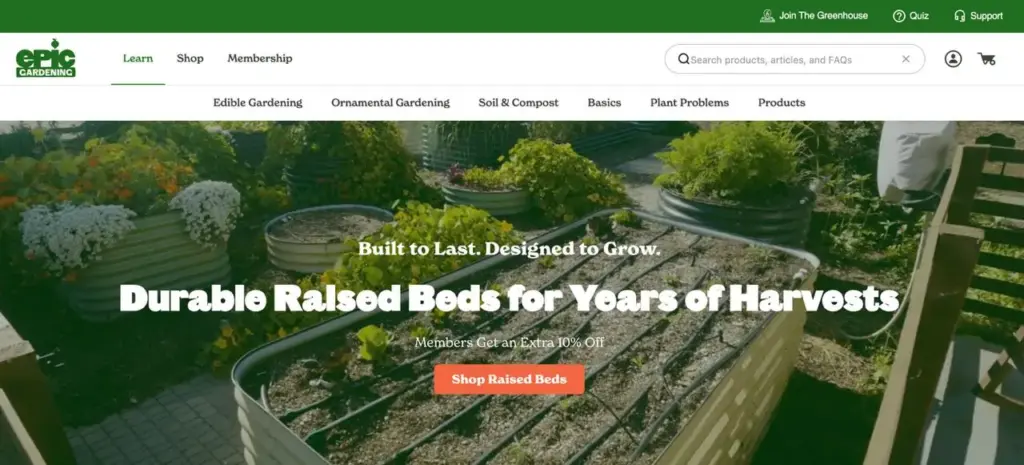
Content they focus on: Epic Gardening creates a mix of educational content, product reviews, and buying guides. Topics range from beginner-friendly gardening tips to more advanced methods like hydroponics and container gardening. They also publish curated lists such as “best tools” and “top systems” to help readers choose the right products.
Why their strategy works: Epic Gardening focuses on a broad but connected niche. Gardening itself has multiple subtopics, but all the content stays within a clear theme. This helps them attract a wide audience while still building strong topical authority.
Their content is highly practical and problem-solving. People visit the site to learn how to grow plants, fix issues, or choose the right tools. This naturally creates opportunities to introduce relevant affiliate products.
They integrate affiliate links in a natural and helpful way. Instead of pushing products aggressively, they recommend tools within tutorials, reviews, and guides where readers already need them.
Another strength is their use of buying guides and curated lists. Articles like “best gardening tools for beginners” or “top hydroponic systems” target users who are already close to making a purchase decision.
A large part of their monetization comes from Amazon affiliate links, where readers can easily buy recommended products. Since the content builds trust first, conversions happen more organically.
Key takeaway: Educational content combined with product recommendations works really well. When you help users solve real problems, they naturally trust your suggestions. Focus on value first, and integrate affiliate links where they genuinely make sense.
8. BestReviews
Niche: General consumer products (tools, home, appliances, sports, and more)
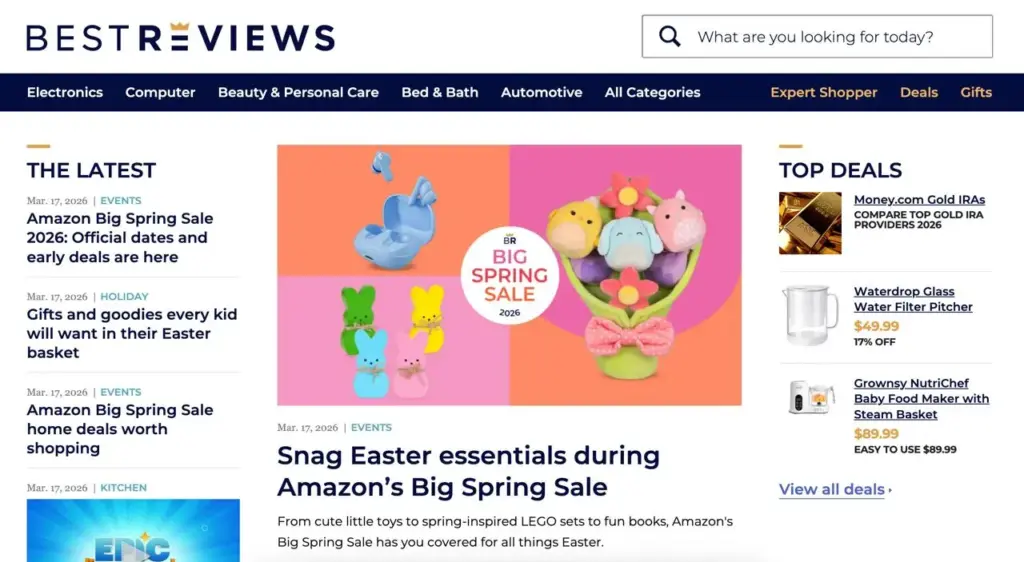
Content they focus on: BestReviews publishes structured buying guides and product roundups across a wide range of categories. Their content is designed to help readers quickly understand options, compare products, and make confident purchase decisions.
Why their strategy works: BestReviews stands out because of its consistency and structure. Every guide follows a familiar format — top picks, key considerations, FAQs, and detailed analysis. This creates a predictable experience, so readers know exactly what to expect each time they visit.
They are also highly search-intent focused. Their content aligns closely with what users type into Google, targeting specific, high-intent keywords and delivering clear, relevant answers.
This combination of structured formatting and intent-driven content makes their pages easy to navigate and highly effective at converting readers.
Key takeaway: Consistency isn’t boring; it builds trust. When readers become familiar with your format, they’re more likely to return and rely on your recommendations. Create a content structure that works and use it consistently across your site.
9. Equipboard
Niche: Music gear (instruments, equipment, and tools used by musicians)
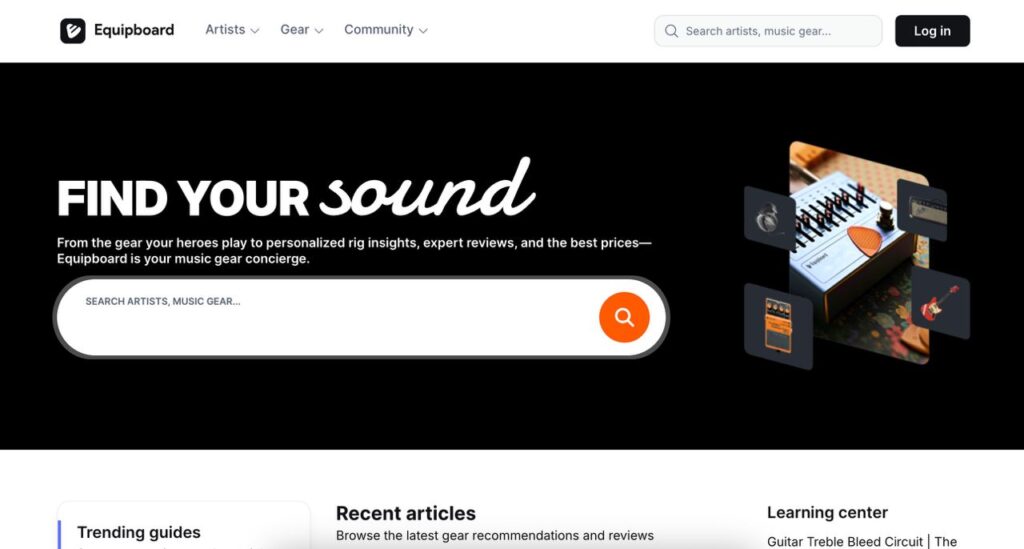
Content they focus on: Equipboard features a mix of product lists, “best of” guides, and user-generated content focused on music gear. A major part of the site highlights the exact tools and equipment used by famous artists, along with community contributions and reviews.
Why their strategy works: Equipboard combines affiliate content with audience psychology. While they do target “best” keywords like many affiliate sites, their real strength lies in tapping into people’s desire to be like their favorite artists.
Instead of just recommending products, they show what gear is used by well-known musicians like Slash, Eminem, or Ariana Grande. This creates a strong emotional connection and makes the recommendations more compelling.
Another key factor is their user-generated content model. Users contribute information about the gear their favorite artists use, which helps the platform grow continuously without relying only on internal content creation.
This combination of community + aspirational content makes the site highly engaging. People don’t just visit to buy, they come to explore, learn, and get closer to the artists they admire.
Key takeaway: Understanding audience motivation can be a huge advantage. When people aspire to be like someone, they’re more likely to buy what that person uses. Combining that with community-driven content can help you scale faster and build deeper engagement.
10. Gear Hungry
Niche: Men’s gear and lifestyle products
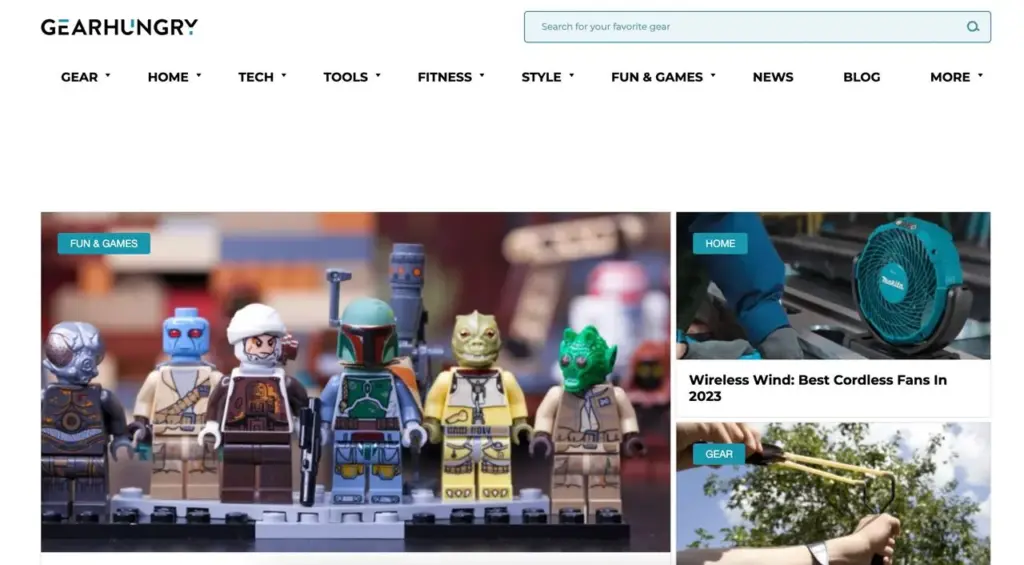
Content they focus on: Gear Hungry publishes product roundups, reviews, and gift guides focused on men’s gear. Their content includes tools, outdoor equipment, gadgets, and everyday accessories tailored to a practical, hands-on audience.
Why their strategy works: Gear Hungry focuses on a very specific buyer persona — men who are interested in functional, no-nonsense gear. This clarity helps them create content that directly speaks to their audience.
Their tone plays a big role. The writing is direct, simple, and practical, which matches what their audience expects. There’s no unnecessary fluff — just clear recommendations and useful insights.
One of their strongest strategies is their gift guide content. Articles like “best gifts for men” or “best gifts for dad” perform especially well during seasonal peaks. These types of searches usually come with strong buying intent, which leads to higher conversions.
By combining clear targeting, the right tone, and high-intent content formats, they consistently attract and convert the right audience.
Key takeaway: Write in a way that reflects your audience. When your tone matches your readers, it builds connection and trust. Also, don’t overlook gift guides; they are one of the most effective and high-converting content types in affiliate marketing.
Click here to discover “Amazon Best Selling Products For Affiliate Marketing”
Strategies successful Amazon affiliate websites use for conversions
When you look at these successful Amazon affiliate websites together, a few clear patterns start to emerge. These aren’t random tactics; they’re repeatable strategies that consistently drive both traffic and conversions.
Detailed comparison tables: Almost every high-performing affiliate site uses Amazon comparison tables. They make it easy for readers to scan multiple products quickly without going through long reviews. This format works especially well for users who are close to making a decision and just need a clear side-by-side comparison.
“Best [Product]” lists: This is the backbone of most Amazon affiliate content. “Best” lists target high-intent keywords, allow you to showcase multiple products in one place, and give you flexibility to update recommendations as the market changes.
SEO-Driven content planning: These sites don’t publish content randomly. Every article is backed by keyword research and search intent. They focus on topics people are actively searching for, which ensures consistent and targeted traffic.
Strategic Internal linking: Successful affiliate sites connect their content in a meaningful way. A single product review often links to a broader buying guide, which may link to a comparison post. This keeps users engaged longer and helps distribute SEO value across the site.
Regular content updates: Affiliate content isn’t “publish and forget.” Prices change, products get updated, and new models replace old ones. The best sites treat their content like assets that need regular updates to stay relevant and competitive.
Trust-building elements: Trust plays a huge role in conversions. Clear affiliate disclosures, detailed author bios, and transparent “about” pages help build credibility. When readers trust your content, they’re far more likely to follow your recommendations.
Having a solid content strategy is one piece of the puzzle. The other is making your affiliate products easy to see, click, and buy. This is where a tool like AzonPress comes in.
AzonPress – Best WordPress affiliate marketing plugin
AzonPress is a WordPress plugin built specifically for Amazon affiliate marketers who want to present products in a more structured and conversion-focused way. Instead of manually adding plain affiliate links or dealing with basic layouts, AzonPress helps you create visually organized product displays that guide readers toward taking action. It simplifies how you showcase products while keeping everything clean, dynamic, and aligned with how modern affiliate sites are built.
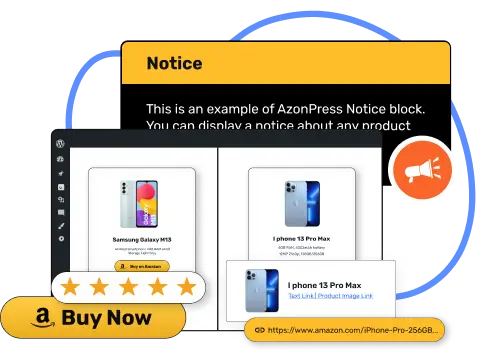
- Product comparison tables – Pull live Amazon data like prices, ratings, and availability
- Product boxes – Designed with clear call-to-action buttons linked to Amazon
- Best seller lists – Display top-selling products directly from Amazon’s API
- Geo-targeting – Show the correct Amazon store based on the visitor’s location
- Auto price updates – Prices sync automatically, so you’re always displaying the most up-to-date Amazon pricing
- Link management – Easily manage, cloak, and track all your Amazon affiliate links
- Shortcode support – Embed Amazon product tables anywhere on your site quickly
- Responsive layouts – Ensures all product displays look great on mobile, tablet, and desktop
The sites we looked at above all use some form of structured product display, comparison tables, product cards, and buy buttons. These elements make the path from “interested reader” to “clicking affiliate link” as smooth as possible.
If you’re serious about building an Amazon affiliate site, having the right display tools matters as much as the content itself. AzonPress handles the technical side so you can focus on the writing and strategy.
Manage links, create product tables, and comparison tables, and increase your affiliate revenue
Ready to turn inspiration into action?
The Amazon affiliate websites mentioned in this article aren’t successful by accident. They all follow a recognizable playbook: pick a focused niche, create content for people who are actively researching purchases, optimize for search, and build trust with readers over time.
None of that is out of reach for someone starting today. You don’t need a massive team or a huge budget to build a legitimate Amazon affiliate site. What you need is a clear niche, a commitment to creating genuinely useful content, and the patience to let SEO compound over months and years.
Look at the sites in this article not as competitors but as models. Study their content structure, their product review formats, and their internal linking patterns. Then build something in your own niche using the same fundamentals.
The affiliate marketing opportunity with Amazon is still very much alive. The question is whether your site gives readers a real reason to trust your recommendations, and that’s entirely within your control.
Start with one well-researched buying guide. Build from there. Remember, the sites you’ve read about here all started somewhere, too.





Read Similar Blogs
We build lasting partnerships to boost and manage revenue growth



Leave a Reply