

Pinterest Affiliate Marketing: How to Get Started in 2026?


Let’s be honest. When most people think of affiliate marketing, they picture Instagram reels, YouTube reviews, or a blog with thousands of monthly visitors. Pinterest rarely makes the shortlist, and that’s exactly what makes it such a goldmine.
Pinterest affiliate marketing is one of the most underrated strategies in the game. I’ve been watching people sleep on Pinterest for years while they burn out on other platforms.
Meanwhile, Pinterest silently sends buying traffic to affiliate links; day after day, month after month, sometimes years after you published a pin.
And the numbers back it up. Pinterest now has over 620 million monthly active users. Nearly 80% of weekly Pinners have made a purchase based on what they found on the platform.
And 90% use Pinterest to plan future purchases. This isn’t a casual scrolling audience. These are people actively looking for things to buy.
So, in this article, we’ll give you a complete overview of how to do affiliate marketing on Pinterest, from understanding how the platform actually works to creating pins that convert.
Whether you’re new to affiliate marketing, you’re an Amazon Associate looking to expand your reach, or you’ve been doing this a while and want a fresh traffic source, this guide covers everything you need to get started the right way.
What is Pinterest affiliate marketing?
Pinterest affiliate marketing is the practice of sharing products on Pinterest using special tracking links. When someone clicks your pin, visits the product page, and makes a purchase, you earn a commission.
It’s that simple in concept, but there’s more to understand.
Unlike throwing affiliate links on a blog and hoping Google sends traffic, Pinterest for affiliate marketing works through visual discovery.
Here’s the thing most people miss: Pinterest isn’t really a social media platform. It’s a visual search engine. People don’t mindlessly scroll Pinterest the way they do Instagram.
People browse Pinterest looking for ideas, solutions, and products. They search for specific things, “Boho bedroom ideas,” “Best meal prep containers,” “Budget living room makeover,” etc.
They have intent, and your job is to put the right product in front of them at the right moment.
You can promote affiliate products in two ways on Pinterest:
- Direct linking – Your pin links directly to the affiliate product page
- Indirect linking – Your pin links to a blog post or landing page that contains affiliate links
Both methods work, but they serve different purposes. Direct linking is faster to set up but gives you less control. Indirect linking takes more effort but lets you warm up your audience and often converts better.
Why use Pinterest for affiliate marketing?
You might be wondering why you should bother with Pinterest when there are so many other traffic sources. Fair question. Here’s why you should consider Pinterest for affiliate marketing.
Pinterest users are in a buying mindset
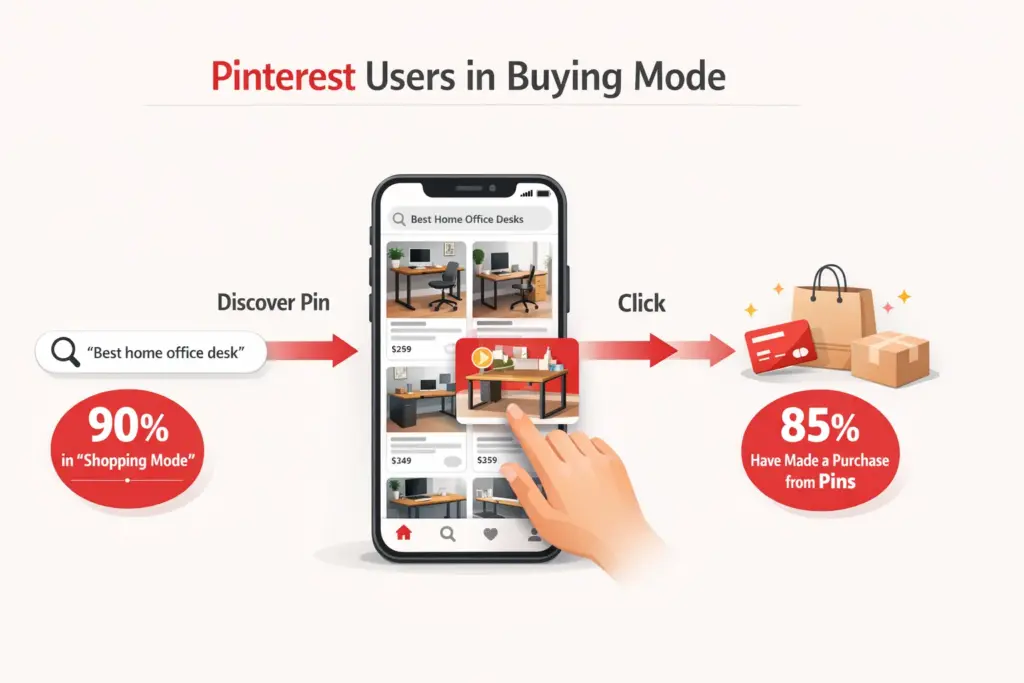
Doing affiliate marketing on Pinterest is particularly attractive because over 90% of Pinterest users are often in “shopping mode.” 85% of weekly Pinners have made a purchase based on pins they’ve seen.
This makes Pinterest affiliate marketing incredibly effective compared to other platforms where people are just scrolling to pass the time. On Pinterest, you’re meeting people exactly where they already want to be met.
Pins have a much longer lifespan than social media posts
If you’re used to platforms like Instagram or TikTok, you know the exhausting cycle. Post today, get views tomorrow, get a lifespan of maybe 24-48 hours, and be forgotten by next week. Pinterest is fundamentally different.
A well-optimized Pin can drive traffic for 3-6 months on average, and many continue to perform for years. This is a dream for every affiliate marketer. You do the work once, and it keeps paying off long after.
Free organic reach; no follower count required
One of the biggest myths about Pinterest is that you need thousands of followers to get results. That’s completely false.
Because Pinterest is a search engine at heart, your pins get discovered based on keywords and relevance, not your follower count. A brand-new account can get traction with the right SEO strategy, no audience required upfront.
Visual content drives clicks naturally
Pinterest users are three times more likely to click through to a brand’s website compared to other social platforms. Beautiful, well-designed pins naturally encourage clicks, which is exactly what you need to drive traffic to your affiliate links.
If you’re in a visually appealing niche (and most profitable niches are), Pinterest is tailor-made for you.
No website required
This is huge to start affiliate marketing on Pinterest for beginners without owning a website. While having a blog definitely helps, you can begin with direct affiliate links and start learning the platform while you build out your web presence.
What to know before starting affiliate marketing on Pinterest?
Before you start creating pins and chasing commissions, there are a few important things to get clear on. This section answers the most common questions beginners have about Pinterest affiliate marketing rules and requirements.
Ignoring these can get your account suspended or your affiliate partnerships terminated.
You need a business account
Pinterest requires business accounts for any commercial activity, including affiliate marketing. The good news? Business accounts are free and give you access to “Pinterest Analytics” and “Pinterest Trends,” which are essential tools for a Pinterest affiliate marketing guide.
Switching from personal to business takes about two minutes. Don’t skip this step.
FTC disclosures are non-negotiable
The Federal Trade Commission (FTC) requires you to disclose when you’re using affiliate links. This isn’t optional, and it applies to Pinterest just like any other platform.
In practice, this means adding disclosure language to your pin descriptions. Something like “This pin contains affiliate links” or using hashtags like #affiliate or #ad works. Pinterest also has a paid partnership label you can use.
Pinterest community guidelines
Pinterest has specific rules about what you can and can’t promote. Prohibited content includes:
- Adult content
- Dangerous products
- Misleading health claims
- Get-rich-quick schemes
- Anything illegal
They also don’t love link cloaking or URL shorteners because these can hide the true destination. Use your direct affiliate links or link to your own website.
Affiliate program terms
Each affiliate program has its own rules about Pinterest. Amazon Associates, for example, allows direct linking to products on Pinterest, but you need to follow their disclosure requirements and can’t use affiliate links in emails or PDFs.
Always read the terms of any affiliate program you join. Getting kicked out because you didn’t read the rules is a preventable problem.
Consistency over shortcuts
The old Pinterest growth hacks, like joining dozens of group boards and repinning the same content endlessly, don’t work anymore. The algorithm now rewards fresh, original content and consistent publishing over gaming the system.
Plan to create original pins regularly rather than looking for shortcuts.
Get access to our exclusive offers and pro tips!
How to do affiliate marketing on Pinterest
Now for the practical part. Here’s your step-by-step Pinterest affiliate marketing guide to get started.
Step 1: Set up a Pinterest business account
If you’re wondering about how to start affiliate marketing on Pinterest, start by creating an account first. Go to Pinterest and sign up for a business account (or convert your existing personal account for free).
Step 2: Optimize your Pinterest profile
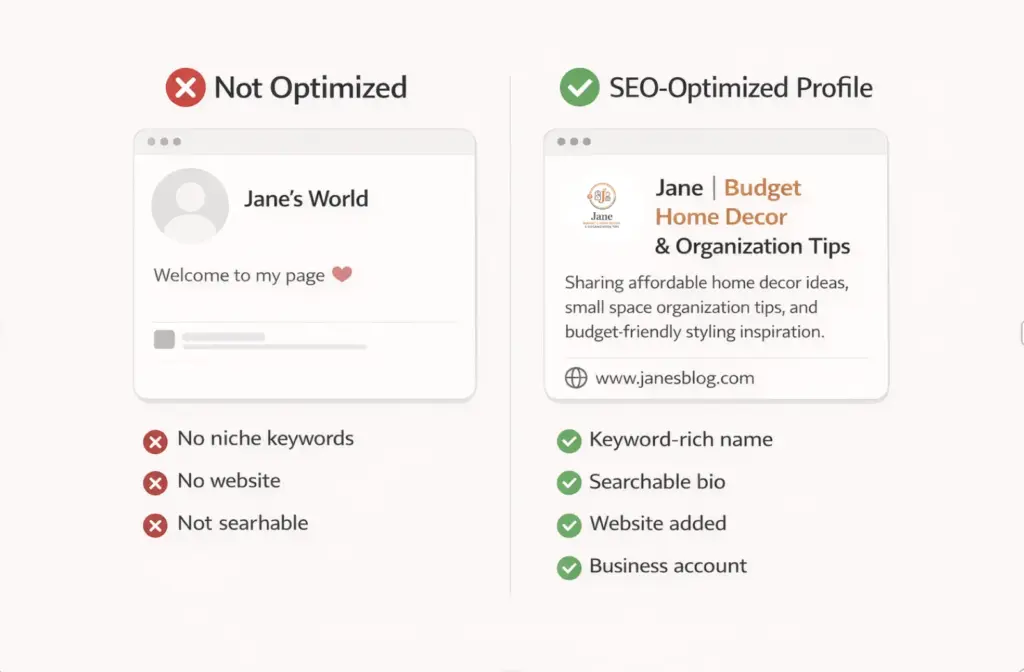
Treat your Pinterest profile like a landing page.
- Use a clear profile photo or logo
- Write a bio that includes relevant keywords for your niche
- Add your website if you have one
- Claim your website to get attribution on your pins
Make sure your profile name and bio are searchable, not just clever. For example, instead of “Jane’s World,” try “Jane | Budget Home Decor & Organization Tips.”
Nobody’s searching for “Jane’s World.” But they are searching for budget home decor.
Step 3: Choose your niche and create boards
Pick a niche that you’re genuinely interested in, and that has strong affiliate marketing potential on Pinterest. Create 5–10 boards around your niche topics.
Give each board a keyword-rich title and a detailed description. This helps Pinterest understand what your content is about and show it to the right people.
For example, If you’re doing Amazon affiliate marketing on Pinterest in the home niche, you might have boards like:
- Kitchen Organization Ideas
- Bedroom Storage Solutions
- Bathroom Organization Hacks
- Home Office Setup
- Bedroom Decor Inspiration
Step 4: Join affiliate programs
Sign up for affiliate programs that fit your niche. Amazon Associates is a popular starting point because you can promote nearly any product. But don’t stop there, programs on ShareASale, Commission Junction, LTK (formerly rewardStyle) often offer higher commission rates and products that convert beautifully on Pinterest.
Step 5: Create and publish your affiliate pins
Design vertical pins (the recommended size is 1000×1500 pixels or a 2:3 ratio), add a compelling title, write a keyword-optimized description with your affiliate disclosure, and attach your affiliate link (or blog post URL).
Publish your pin to the most relevant board. Aim to create fresh pins consistently, at least 5–10 per week when you’re starting out.
Quality matters more than quantity. One really good pin beats ten mediocre ones every time.
Step 6: Use Pinterest SEO to get discovered
Pinterest SEO for affiliate marketing is your biggest growth lever. Research keywords using Pinterest’s built-in search bar; type in a topic and look at the auto-suggestions. These are real searches people are making.
Include these keywords in your pin title, pin description, board title, board description, and even on the text overlay of your pin image. The Pinterest algorithm uses all of this to decide who to show your pins to.
Don’t keyword stuff. Just be intentional about the words you use.
Step 7: Track your performance
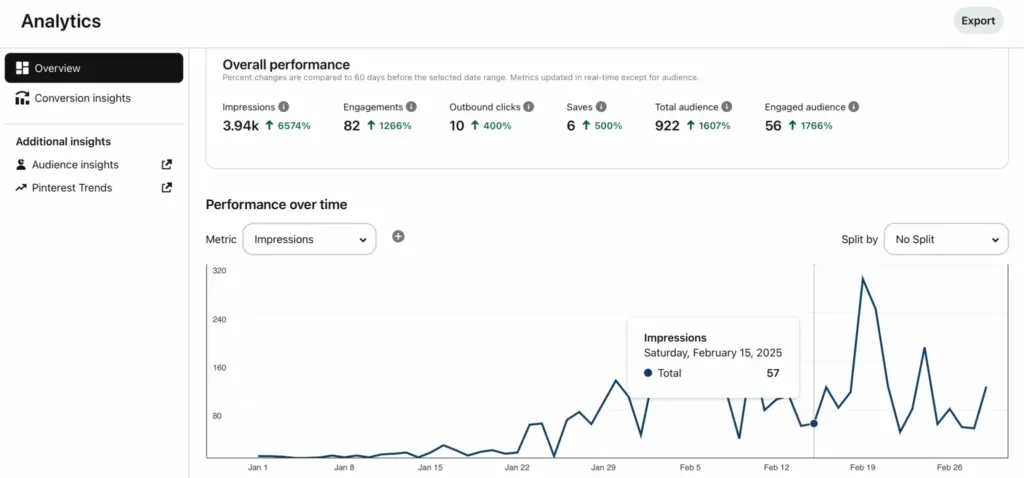
Check your Pinterest analytics weekly. See which pins are getting impressions, saves, and outbound clicks. Create more content similar to what’s working and less of what isn’t.
What are the most profitable Pinterest niches in 2026?
Not all niches perform equally on Pinterest. The platform’s audience leans heavily toward lifestyle, planning, and discovery, which means some niches have a massive natural advantage.
But here’s something most people don’t talk about: the demographics matter. A lot.
Pinterest’s audience is about 70% female, with 42% being Gen Z users. More than 70% of the total audience is under 34 years old. This isn’t your typical social media breakdown; this is a young, predominantly female audience with real buying power and specific interests.
So when you’re choosing a niche for affiliate marketing on Pinterest, you’re not just picking something popular. You’re picking something that resonates with who’s actually using the platform. Keep that in mind as we go through these top-performing categories.
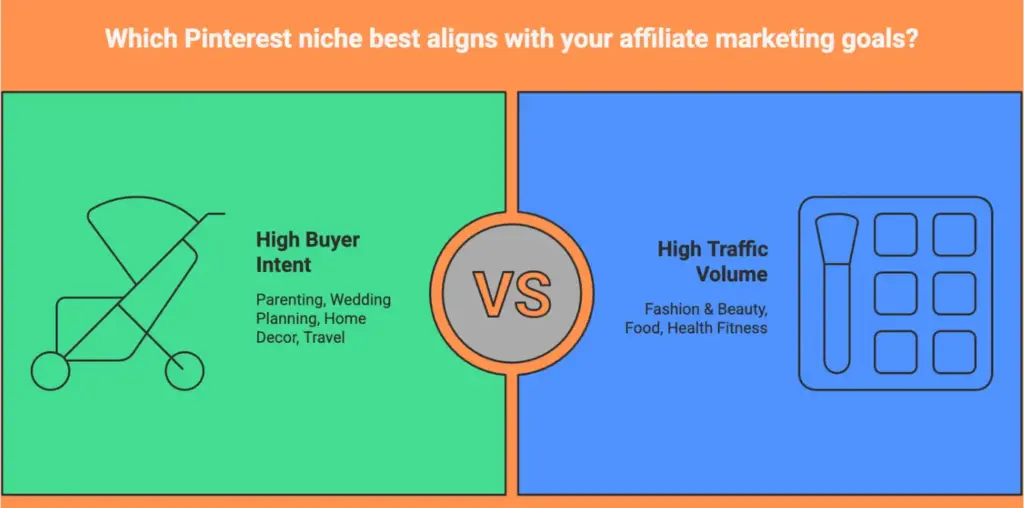
Home decor and interior design
Pinterest was practically built for home content. Around 79% of Pinterest users are interested in home decor content.
The platform’s core demographic, young women setting up apartments, first homes, or upgrading their spaces, constantly searches for room makeover ideas, storage solutions, and decor inspiration.
Products like organizers, furniture, and decorative items convert well because users can visualize them in their own spaces.
Fashion and beauty
This is arguably Pinterest’s strongest category given the demographic. Outfit ideas, skincare routines, makeup tutorials, and “aesthetic” content dominate the platform.
Gen Z especially drives trends around affordable fashion finds, clean beauty, and “get ready with me” style content. Seasonal content like “fall outfit ideas” can drive massive traffic.
Amazon affiliate marketing on Pinterest in the beauty space is especially popular because of the wide product selection and the trust people have in Amazon reviews.
Health, Fitness, and Wellness
Gen Z and millennials are obsessed with wellness in a way previous generations weren’t. Young women are the primary consumers of wellness content, workout routines, healthy recipes, mental health tips, and self-care products.
Workout equipment, supplements, meal prep containers, yoga gear, and wellness journals all perform well. Just avoid making exaggerated health claims.
Parenting and baby products
While Pinterest skews young, a significant portion of users are new or expecting parents. Nursery ideas, baby gear recommendations, and parenting tips remain highly searched. This niche has high buyer intent because parents are constantly buying things for their kids.
Wedding and event planning
Pinterest has always been the go-to platform for wedding planning, and this extends to other events like baby showers, birthday parties, and holiday gatherings.
The predominantly female audience planning these events makes this a strong affiliate niche for decor, supplies, and gifts. Affiliate programs for wedding registries, wedding decor, bridal fashion, and even honeymoon travel all perform well here. This audience is actively spending money.
Food, recipes, and kitchen products
Recipe pins are among the most saved content on Pinterest. The platform’s audience loves meal planning, aesthetic food photography, and kitchen organization.
While individual products might be lower-ticket (kitchen tools, ingredients, appliances), the sheer volume of traffic can make up for it.
Travel
Travel packing lists, destination guides, and travel gear recommendations are perennially popular for Pinterest affiliate marketing. Affiliate programs like Booking.com, Tripadvisor, and travel gear on Amazon all work in this space.
Travel content also has incredible evergreen potential. A well-ranked pin about “what to pack for Iceland” can drive traffic for years.
Apart from these, there are more niches to do profitable affiliate marketing on Pinterest, such as DIY and crafts, Personal finance, Self-Improvement etc.
How to choose the right affiliate programs for Pinterest
Now you know how to do affiliate marketing on Pinterest, but not every affiliate program is a good fit for Pinterest. Here’s what to look for and where to find the best options.
What to look for in an affiliate program
Visual products: Pinterest is image-driven, so products that photograph well perform better. Physical products (home goods, beauty, fashion, kitchen tools) tend to outperform abstract services.
Reasonable commission rates: Look for at least 4–5% on physical products, or 20%+ on digital products and software.
Cookie duration: A longer cookie window (30–90 days) gives you more time to earn commissions after someone clicks your link. Amazon’s 24-hour cookie is notoriously short, but it has a 90-day extended period.
24 Hours or 90 Days? Amazon Affiliate Cookie Duration Explained
Pinterest-friendly terms: Always confirm the program allows sharing links on Pinterest. Some programs are restrictive about where you can promote their links.
Best affiliate networks to explore
Here are some of the best affiliate programs you can join.
Amazon Associates
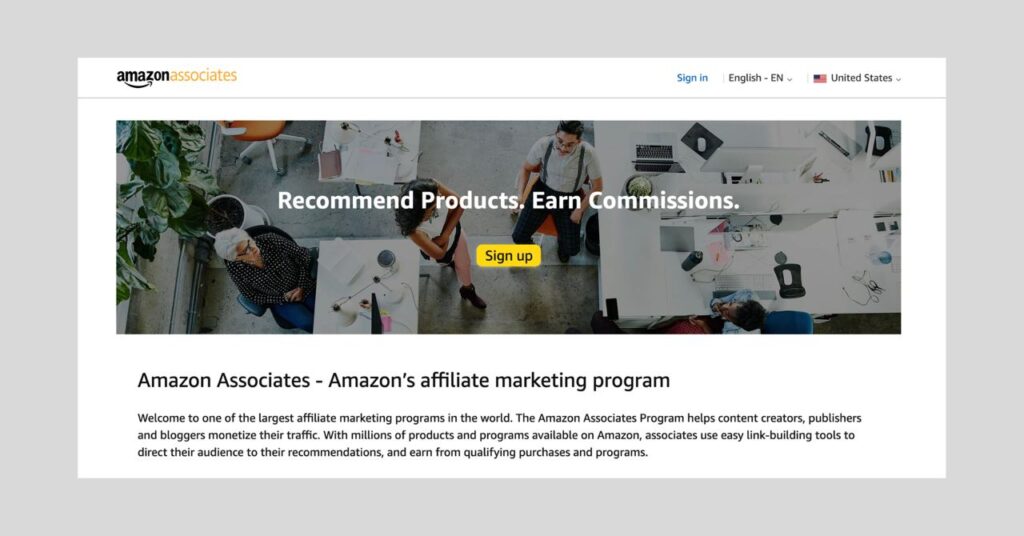
Amazon Associates is the easiest starting point for affiliate marketing on Pinterest for beginners. The product range is huge, and almost any niche has relevant products on Amazon.
Amazon affiliate marketing on Pinterest works well because:
- Almost everyone trusts Amazon
- The product catalog is enormous
- People often buy more than what you linked to
- Commission rates range from 1-10% depending on the category
Beyond Amazon, here are networks worth exploring:
ShareASale
ShareASale hosts thousands of merchant programs across every niche imaginable. You’ll find everything from home goods to fashion to software. Commission rates vary by merchant but are often higher than Amazon’s. The platform is beginner-friendly and has good reporting tools.
CJ Affiliate (Commission Junction)
CJ is one of the oldest affiliate networks and partners with major brands. If you want to promote well-known companies, CJ probably has them. The approval process can be stricter than other networks, but the brand recognition can improve your conversion rates.
Direct brand programs
Many companies run their own affiliate programs outside of networks. If there’s a specific brand you love in your niche, check their website footer for an “Affiliates” link. Direct programs often offer better rates since there’s no network taking a cut.
How to create high-converting affiliate pins?
This is where a lot of people leave money on the table. You can have the perfect niche and the best affiliate program, but if your pins don’t catch attention and generate clicks, nothing else matters.
Here are the Pinterest affiliate marketing tips that actually move the needle.
Pin design best practices
Always use a vertical format, 1000x1500px (2:3 ratio) is the Pinterest standard. Horizontal or square pins take up less screen space and get less visibility.
Here’s what makes a pin stand out:
- Use high-quality, bright images: Dark or blurry images get scrolled past.
- Add a bold text overlay with your main keyword or benefit: Like “10 Amazon Kitchen Finds Under $20.”
- Keep fonts clean and legible: Serif fonts feel editorial, sans-serif fonts feel modern. Avoid anything hard to read at a glance.
- Stick to a consistent color palette: It becomes recognizable as your brand. Also, use colors that pop.
- Use Canva or Adobe Express: You can create professional-looking pins without any design experience.
Design for mobile first
Most Pinterest users are on mobile devices. Make sure your text is large enough to read on a phone screen. Test your pins by viewing them on your own phone before publishing.
Writing pin titles and descriptions
Your pin title should lead with a keyword and a clear benefit. Think search intent: what is someone typing into Pinterest to find your content? Lead with that.
In your description, expand naturally on the topic, weave in 2–3 related keywords, and always include your affiliate disclosure.
Pin directly or link to a blog post
Both strategies work, but for most affiliate marketers, especially Amazon affiliates, linking through a blog post is the stronger long-term play.
Because blog posts let you include multiple affiliate links in one place, build your SEO, capture email subscribers, and give readers more context before they commit to buying.
Direct affiliate links work best for programs that allow it and for impulse-purchase products.
Create multiple pins for the same content
Pinterest affiliate marketing tips that most people skip are making multiple pins to promote each product. Make 3–5 different pin designs linking to the same blog post or product. Different images attract different people.
Try video pins
Video pins get 2–3x more impressions than static image pins on Pinterest. Short, useful videos (under 60 seconds) showing how a product works or styling an outfit can dramatically increase your reach.
Wrapping up
Pinterest affiliate marketing isn’t a get-rich-quick scheme. But it is one of the most sustainable, scalable, and honestly exciting ways to build passive affiliate income.
The path is straightforward: pick a profitable niche, set up your business account, join the right affiliate programs, create beautiful and useful pins consistently, optimize for search, and track what works.
If you’re an Amazon Associate, use Pinterest to drive traffic to your blog posts where your Amazon affiliate links live, that’s both the safer and more profitable approach. If you’re working with other programs, test direct linking carefully and always put your affiliate disclosure front and center.
So pick your niche, open Canva, create your first pin, and let Pinterest do the rest.
FAQs
Q. How often should you post affiliate pins?
A. Consistency beats volume. Aim for 5–10 fresh pins per week when starting.
Q. Should I pin directly or link to a blog post first?
A. Both strategies work, but for most affiliate marketers, especially Amazon affiliates, linking through a blog post is the stronger long-term play.
Q. Can I do Pinterest affiliate marketing without a website?
A. Yes, you can link pins directly to affiliate product pages. However, having a blog is strongly recommended.
Q. Do I need Pinterest ads to succeed with affiliate marketing?
A. No. Organic reach on Pinterest is incredibly strong compared to other platforms. Focus on SEO, consistent pinning, and quality content first. Once you’re making consistent affiliate income, then you can test Pinterest ads to scale.
Q. Can I use the same pin multiple times?
A. Yes, but be strategic. Don’t spam the same pin over and over. Instead, create 3–5 different pin designs for the same blog post or product.
Q. Can I do affiliate marketing with my personal Pinterest account?
A. No. You must have a business account for that.





Read Similar Blogs
We build lasting partnerships to boost and manage revenue growth


Leave a Reply